
 Admin
Admin
Introduction
The food blogging world has never been more vibrant, more diverse, or more genuinely useful to home cooks than it is right now. Somewhere between the oversaturated recipe dump sites and the overly produced cooking shows, a new generation of food creators has emerged who are doing something different. They are cooking real food, sharing real techniques, building real communities, and growing at a pace that tells you everything you need to know about where food content is heading in 2026.Whether you are looking for weeknight dinner inspiration, deep dives into regional cuisines you have never explored, budget-conscious meal ideas, or the kind of baking content that makes you want to clear your weekend schedule and get flour on everything, the bloggers on this list are the ones worth your attention right now. These are not the biggest names in food media. They are the fastest growing, the most interesting, and the most likely to become the names everyone is referencing a year from now.
This list was compiled based on audience growth trajectory, content quality, engagement rates, originality of voice, and the kind of genuine community building that distinguishes creators with real longevity from those having a viral moment. Here are the ten fastest growing food bloggers you absolutely need to be following in 2026.
2. What makes a food blogger worth following in 2026
Before getting into the list, it is worth understanding what separates the food creators genuinely worth your time from the ones producing content that all looks and tastes the same.
The best food bloggers in 2026 share a few characteristics that have nothing to do with follower counts and everything to do with genuine value.
A distinct point of view: The most compelling food creators have a specific perspective, whether that is a regional culinary tradition they are preserving, a dietary philosophy they are exploring honestly, a cooking skill level they are genuinely at, or a cultural background that informs everything they make.
Recipes that actually work: This sounds basic but it is surprisingly rare. The best bloggers test their recipes properly and write instructions that a real person can follow in a real kitchen with real equipment.
Authentic engagement: The fastest growing creators in 2026 are building communities, not just audiences. They respond to comments, incorporate reader feedback, and create a genuine sense of connection with the people following their work.
Consistency with evolution: They show up regularly but they also grow. Their content from six months ago looks different from their content today in ways that feel like genuine development rather than trend-chasing.
With those criteria in mind, here are the ten food bloggers growing fastest and most meaningfully in 2026.
3. The 10 fastest growing food bloggers to follow in 2026
3a. Amara Osei: West African home cooking for the modern kitchen
Amara Osei has been building her platform around Ghanaian and broader West African home cooking for three years, but 2026 is the year her audience has exploded. Her approach is deeply personal and genuinely educational. She grew up watching her grandmother cook dishes that she now recreates with the patience and detail of someone who understands that these recipes deserve to be documented and shared properly.What makes Amara’s content stand out in an increasingly crowded food space is her commitment to accessibility without dilution. She does not simplify West African dishes into something unrecognizable for a Western audience. She explains techniques, sourcing, and cultural context in a way that brings her audience genuinely into the cuisine rather than giving them a vague approximation of it.
Her jollof rice series alone has driven hundreds of thousands of new followers in 2026, and the debate she sparked about regional variations became one of the most engaged food conversations online this year. Her blog features detailed written recipes with ingredient sourcing guides, which has made her a go-to resource for anyone wanting to cook West African food authentically outside of West Africa.
Why she is growing so fast: Authenticity, educational depth, and a cuisine that is finally getting the mainstream attention it has always deserved.
Best content to start with: Her groundnut soup tutorial and the series on one-pot rice dishes across the African continent.
3b. Marcus Thielemann: Budget cooking that refuses to be boring
Marcus started his food blog after a period of genuine financial difficulty forced him to completely rethink how he cooked. Rather than treating budget cooking as a compromise, he approached it as a creative constraint, and the results he produces from minimal ingredients at minimal cost are consistently impressive enough that people with comfortable food budgets follow him purely for the inspiration.His content resonates because it is honest about the reality that most food media ignores. Fancy ingredients, specialty equipment, and the luxury of time are not universally available, and the food content that pretends otherwise is not serving a significant portion of its potential audience. Marcus serves that audience brilliantly and without condescension.
His blog posts include detailed cost breakdowns per serving alongside the recipes, which has become something of a signature feature and something his audience genuinely relies on for meal planning. He also runs a weekly series where he takes a single inexpensive ingredient and shows five completely different ways to use it across different cuisines, which consistently generates his highest engagement.
Why he is growing so fast: Genuine usefulness combined with creative cooking that makes budget meals feel like a choice rather than a limitation.
Best content to start with: His dried bean masterclass series and the weekly single-ingredient challenge posts.
3c. Priya Nair-Hoffman: Indian regional cooking beyond the familiar
Priya has built her platform around a simple but powerful premise. Indian cuisine is not a single thing, and the tikka masala-centric version of it that dominates food media outside India represents a tiny fraction of one of the world’s most diverse culinary traditions. Her blog is a systematic, passionate, and thoroughly enjoyable exploration of regional Indian cooking in all its variety.
In 2026, her audience has grown dramatically as interest in authentic regional cuisine has accelerated across food media. She covers everything from the coconut-forward cooking of Kerala to the mustard-heavy dishes of Bengal, the street food culture of Mumbai to the slow-cooked traditions of Hyderabad, with the specificity and knowledge of someone who has spent serious time understanding the geography, history, and culture behind every dish.Her photography is gorgeous but never so styled that it disconnects from the reality of the food. Her recipes are tested for home kitchens with realistic spice access, and she provides substitution guidance for ingredients that are hard to source outside South Asia without compromising the essence of the dish.
Why she is growing so fast: A knowledgeable, specific, and generous approach to a cuisine that millions of people love but feel they only know superficially.
Best content to start with: Her Kerala fish curry deep dive and the series on Indian breakfast dishes that Westerners have never encountered.
3d. James Kowalski: Fermentation and preservation for regular home cooks
James arrived in food blogging from a background in food science and it shows in the best possible way. His content on fermentation, pickling, curing, and preservation is technically grounded in a way that most hobbyist fermentation content is not, and he has the rare ability to translate that technical grounding into instructions that genuinely demystify the processes for home cooks who find fermentation intimidating.
His growth in 2026 has been driven significantly by the broader cultural interest in gut health, food preservation, and the satisfaction of making things from scratch that most people buy. But he is careful not to make health claims he cannot substantiate, which gives him a credibility in his space that many wellness-adjacent food creators lack.His sourdough troubleshooting series is widely considered the most genuinely useful guide to sourdough problems available anywhere online, and it has driven consistent search traffic to his blog throughout the year. His kimchi, miso, and natural wine fermentation content appeals to a different but equally engaged audience segment.
Why he is growing so fast: Technical credibility meets genuine accessibility in a subject that has enormous audience appetite right now.
Best content to start with: The sourdough troubleshooting guide and his beginner fermentation starter kit series.
3e. Sofia Reyes-Montoya: Mexican regional cuisine and the stories behind it
Sofia’s food blog is as much about cultural memory and family history as it is about recipes, and that combination of personal storytelling and genuinely excellent cooking has built her one of the most devoted audiences in the food blogging space in 2026. She is from Oaxaca originally and her deep knowledge of Oaxacan cooking forms the centre of her content, but she ranges widely across Mexican regional cuisines with the curiosity and respect of someone who genuinely loves the full breadth of her culinary heritage.
What separates Sofia from many cultural food bloggers is her willingness to talk directly about the misrepresentation of Mexican cuisine in food media, the difference between Tex-Mex and the regional cooking it is loosely based on, and the ways that Mexican food has been oversimplified and stripped of context in its global popularization. These conversations generate significant engagement and introduce her to new audiences who appreciate the honesty.Her mole series has run for three months in 2026 and shows no signs of losing momentum. Each installment covers a different mole variation with the depth of a culinary history lesson wrapped in a genuinely excellent recipe.
Why she is growing so fast: A unique combination of culinary excellence, personal storytelling, and cultural honesty that creates deeply loyal readership.
Best content to start with: The Oaxacan black mole deep dive and her series on Mexican breakfasts.
3f. David Lim: Cantonese home cooking and dim sum demystified
David grew up watching his parents run a Cantonese restaurant in Toronto and his food blog is built on the knowledge absorbed across a childhood spent in professional kitchens. His content focuses on Cantonese cooking techniques and dim sum preparation with a level of practical detail that reflects genuine professional knowledge filtered through a home cooking lens.His dim sum at home series launched in early 2026 and has driven his fastest growth period yet. He covers everything from har gow wrappers to turnip cake to lo mai gai with the kind of step-by-step precision that makes dishes most people only eat in restaurants feel genuinely achievable at home.
Beyond dim sum, his content on Cantonese roasting techniques, clay pot cooking, and the wok skills that underpin most Cantonese home cooking has built him a reputation as one of the most technically reliable Chinese cooking resources available in English online.
Why he is growing so fast: Professional-level knowledge presented with the patience and accessibility of an excellent teacher.
Best content to start with: The har gow wrapper masterclass and his wok skills fundamentals series.
3g. Fatima Al-Rashidi: Middle Eastern cooking across the full region
Fatima is pushing back against the tendency of Middle Eastern food media to flatten an enormous and diverse culinary region into a handful of familiar dishes. Her blog covers the full geographic and cultural range of Middle Eastern cooking, from Moroccan tagines to Lebanese meze to Yemeni saltah to Persian rice dishes, with the knowledge and specificity of someone who has researched deeply and cooked extensively across the tradition.
Her growth in 2026 has been particularly strong because her content coincides with a genuine surge in mainstream interest in Middle Eastern cuisine that has moved well beyond hummus and falafel. She is positioned as one of the most knowledgeable and accessible guides to this broader culinary world in the English-language food blogging space.Her spice guides are among the most shared food content of 2026 in her niche. Rather than treating Middle Eastern spice blends as exotic mysteries, she explains the logic, the regional variations, and the practical applications in a way that makes them feel completely approachable to anyone willing to spend fifteen minutes reading carefully.
Why she is growing so fast: Deep knowledge, generous teaching style, and content that perfectly matches the current direction of mainstream culinary curiosity.
Best content to start with: The Persian rice cooking guide and the regional spice blend series.
3h. Tom Brennan: Whole animal cooking and sustainable meat practices
Tom comes from a butchery background and his food blog reflects both the technical knowledge and the philosophical perspective that comes with it. His content is centred on whole animal cooking, nose-to-tail preparation, and the argument that sustainable meat consumption is as much about what you do with the animal as it is about how it was raised.
His audience in 2026 spans serious home cooks interested in technique, sustainability-conscious consumers who want to understand their food supply more deeply, and people who are simply tired of cooking the same four cuts of meat repeatedly and want to expand their repertoire significantly.His offal content, which might seem niche, consistently generates his highest engagement because he approaches it not as a challenge for the adventurous but as a gateway to some of the most flavourful and economical cooking available to anyone willing to learn the techniques. His braised oxtail, crispy pig ear, and chicken liver parfait content are among the most viewed recipe posts on his blog.
Why he is growing so fast: A distinctive, principled perspective on meat cooking that challenges assumptions and delivers genuinely excellent results.
Best content to start with: The butchery basics series and his guide to cooking the cuts most people throw away.
3i. Anika Bergström: Nordic home cooking for every season
Anika’s food blog is a love letter to Scandinavian and broader Nordic home cooking, grounded in her Swedish upbringing and her serious interest in the foraging, preservation, and seasonal cooking traditions of the region. Her content is deeply seasonal in a way that feels intentional rather than performative, genuinely shifting with what is available and what makes sense to cook across the Nordic culinary year.
Her photography is among the most beautiful in food blogging without ever tipping into the kind of over-styled unreality that makes food content feel dishonest. She shoots in natural light with a restraint that makes everything look genuinely appetising rather than aspirationally perfect.Her fermentation and preservation content overlaps with broader trends in that space but is distinctly Nordic in character, covering gravlax curing, aquavit-pickled vegetables, lingonberry preparations, and the preservation traditions that evolved in response to long Nordic winters with limited fresh produce availability.
Why she is growing so fast: Beautiful, specific, and genuinely educational content about a culinary tradition that most food media covers superficially if at all.
Best content to start with: The Swedish midsummer feast series and her guide to Nordic preservation techniques.
3j. Kwame Asante-Boateng: Modern African fusion done with respect for the source
Kwame occupies a specific and increasingly important space in food media. He is interested in the evolution of African cuisines, the ways they are being reinterpreted in diaspora communities around the world, and the question of how culinary fusion can honour its sources rather than simply borrowing surface elements for novelty.
His food blog covers both traditional preparations and his own creative cooking, which applies the techniques and flavours of West and East African cuisine to ingredients and contexts that reflect his life in London. The result is food that feels genuinely original while remaining clearly connected to its culinary roots.His growth in 2026 has been accelerated by a broader conversation in food media about who gets to create fusion cuisine and how those conversations should be held. Kwame engages with these questions directly and thoughtfully in his writing, which has built him an audience that spans food enthusiasts, cultural commentators, and professional chefs.
Why he is growing so fast: Genuinely original cooking, thoughtful cultural engagement, and a perspective that is not replicated anywhere else in food media.
Best content to start with: His suya spice series and the post on how African fermentation techniques are influencing fine dining globally.
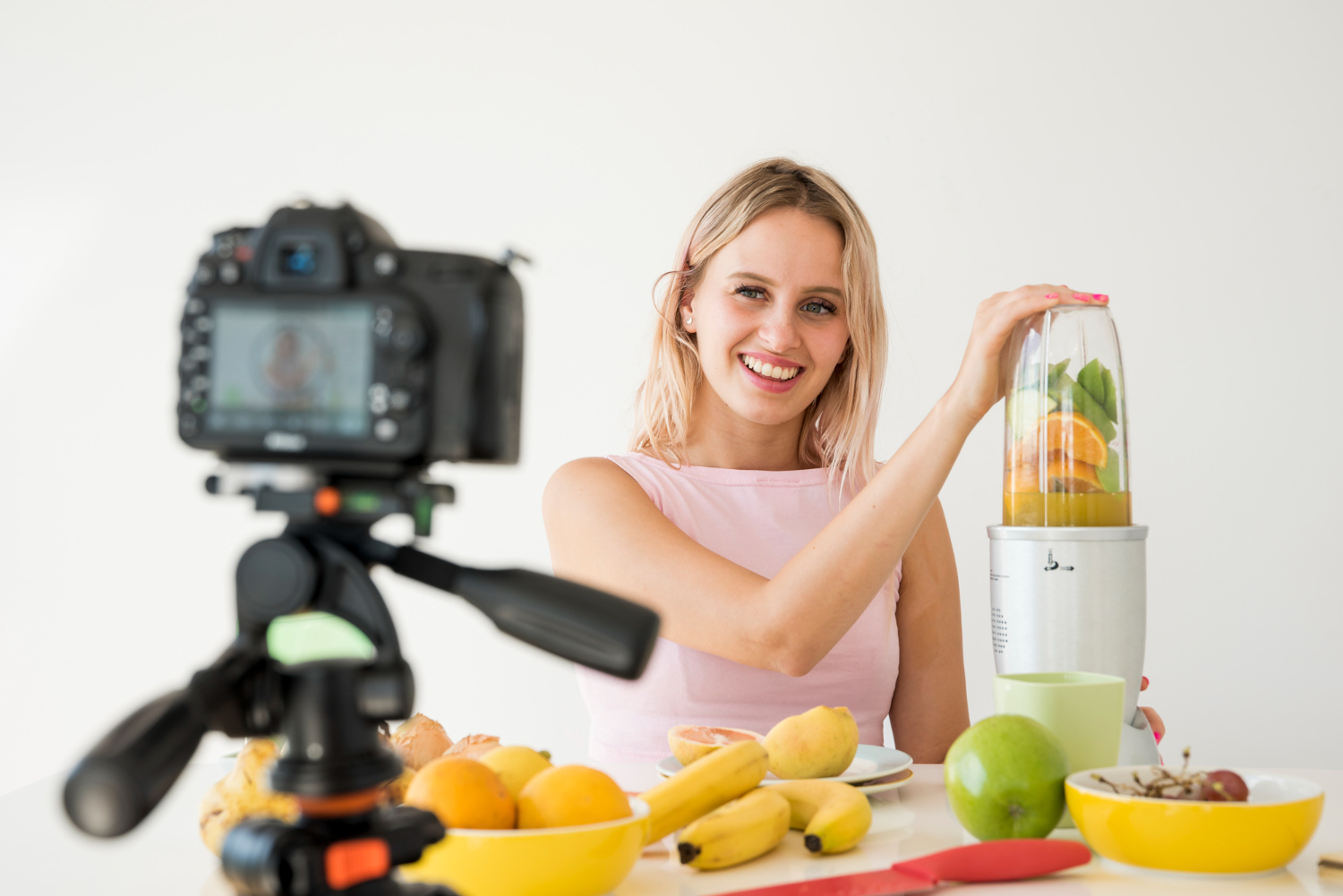
4. Why following food bloggers beats algorithm-fed content in 2026
There is a specific value in deliberately choosing which food creators you follow rather than letting an algorithm decide what cooking content reaches you. Algorithms optimize for engagement, which means they surface content that provokes quick reactions. The best food content rewards slower, more intentional consumption.When you follow a specific blogger whose voice, values, and culinary perspective resonate with you, you build a relationship with a point of view rather than consuming an infinite feed of disconnected recipes. Over time, you understand why they make the choices they make, you trust their recommendations, and you learn more from their content because it exists within a context you understand.
The ten bloggers on this list are all worth following in that sustained, intentional way. Their fastest growth comes precisely because they have figured out how to build that kind of relationship with their audiences at scale.
5. How to get the most out of following food bloggers
Following a food blogger is not the same as subscribing to a recipe database. Here are a few ways to get genuine value from the creators you choose to follow.
- Subscribe to their email newsletter if they have one, as this is typically where their most considered, least algorithm-dependent content lives
- Read the full blog posts rather than jumping straight to the recipe card, as the context, technique explanations, and personal notes usually contain the most useful information
- Actually cook the recipes and engage with the creator when you do, as the feedback loop between creator and cooking audience is what makes food blogging communities genuinely valuable
- Follow their recommended resources including cookbooks, ingredient suppliers, and related creators, as good food bloggers are usually connected to a wider ecosystem of quality content
- Look at their recipe archives rather than just their newest content, as established bloggers often have older posts that are among their best work but are no longer promoted actively
6. Conclusion
The ten food bloggers on this list represent something genuinely exciting about where food content is in 2026. They are specific, knowledgeable, honest, and generous with what they know. They are growing because they are good at what they do and because they serve their audiences with real intention rather than optimizing cynically for reach.Follow them. Cook their recipes. Read their posts from beginning to end. Engage with their communities. The return on that investment, in cooking skills, culinary knowledge, and genuine inspiration, will be felt in your kitchen for years.
Food media at its best makes you a better cook and a more curious eater. These ten creators are doing exactly that.
10 fastest growing food bloggers 2026: Frequently asked questions
1. Who are the fastest growing food bloggers in 2026?
The fastest growing food bloggers in 2026 include creators focusing on underrepresented culinary traditions, budget cooking, fermentation, and sustainable practices. Amara Osei for West African cooking, Priya Nair-Hoffman for Indian regional cuisine, Sofia Reyes-Montoya for Mexican cooking, and David Lim for Cantonese dim sum are among the most notable fast-growing voices this year. Growth is driven by authentic voice, genuine culinary knowledge, and content that serves specific audiences deeply rather than broad audiences superficially.
2. What makes a food blogger grow quickly in 2026?
The fastest growing food bloggers in 2026 share several characteristics: a distinct and specific culinary point of view, recipes that genuinely work in home kitchens, honest and engaged community building, and content that serves a real need rather than chasing trends. Authenticity and genuine expertise consistently outperform production value and trend-following in terms of sustained audience growth.
3. How do I find new food bloggers worth following?
Start with the social platforms where food content performs best including Instagram, TikTok, YouTube, and Pinterest. Look beyond follower counts to engagement rates and comment quality, as smaller creators with highly engaged audiences often produce better content than large accounts with passive followings. Food blogging directories, food media newsletters, and recommendations from creators you already follow are also reliable discovery channels.
4. Are food blogs still relevant in 2026 with so much video content available?
Yes, food blogs remain highly relevant in 2026. Written recipes with detailed instructions, process notes, and ingredient guidance serve a different and complementary function to video content. Many food creators operate across both formats, with video content driving discovery and blog posts serving as the detailed reference resource readers return to when actually cooking. Search engine traffic to recipe blogs remains significant, and email newsletters from food bloggers have seen increased engagement as social media algorithms become less reliable for content discovery.
5. What food niches are growing fastest in 2026?
The fastest growing food content niches in 2026 include regional cuisines from underrepresented traditions particularly African and Middle Eastern cooking, fermentation and food preservation, budget cooking that does not compromise on quality or flavour, whole animal and sustainable meat cooking, and the intersection of food with cultural identity and history. Creators who occupy specific positions within these niches are growing faster than generalist food bloggers.
6. How do food bloggers make money in 2026?
Food bloggers in 2026 generate revenue through multiple channels including display advertising on their blog, sponsored content partnerships with food and kitchen brands, affiliate marketing for kitchen equipment and ingredients, digital products including e-books and online courses, paid newsletter subscriptions, cookbook deals, and live events including cooking classes and supper clubs. The most financially stable food bloggers typically use a combination of several of these revenue streams rather than relying on any single one.
7. What is the difference between a food blogger and a food influencer?
The distinction has blurred considerably but generally food bloggers produce longer-form content centred on a website or blog with detailed recipes and written context, while food influencers primarily create short-form social media content. Many creators operate as both. Food bloggers tend to build deeper reader relationships and generate more sustained search traffic, while influencers can achieve faster viral reach. The fastest growing food creators in 2026 typically operate across both formats effectively.
8. How often do the best food bloggers post new content?
Posting frequency varies significantly across successful food bloggers. Some post multiple times per week while others publish once or twice monthly with longer, more deeply developed content. Consistency matters more than frequency for audience growth and SEO performance. The bloggers on this list prioritize content quality over volume, and their audiences reflect the loyalty that comes from that approach.
9. Can food bloggers influence what ingredients become popular?
Yes, significantly. Food bloggers and food content creators have measurable influence on ingredient sales, recipe search trends, and what mainstream food retailers stock. When a food blogger with a large engaged audience focuses sustained attention on an underused ingredient or a specific culinary tradition, it creates real downstream effects on how their audience shops, cooks, and eats. The fastest growing food bloggers in 2026 are actively shaping mainstream culinary culture in ways that more established food media is then following.
10. What should I look for when choosing which food bloggers to follow?
Look for a consistent and distinctive culinary voice, recipes that include enough detail to be genuinely useful, transparent testing and honest acknowledgment when things do not work, genuine engagement with their community, and content that makes you want to cook rather than just consume passively. The best food bloggers make you better in your own kitchen, not just more entertained while scrolling. Use those criteria rather than follower count as your primary filter.

GIPHY App Key not set. Please check settings