
 Admin
Admin
Introduction
If you have been thinking about eating healthier but have no idea where to begin, you are in the right place. Starting a 7-day diet plan does not have to be overwhelming or confusing. Honestly, once you understand a few basic rules, it all starts to feel much more manageable. This guide is written especially for beginner people who want to lose weight, feel better, and build healthier habits without following complicated rules or spending hours in the kitchen.
So, what makes this plan different? First of all, every meal is simple, affordable, and easy to prepare. Furthermore, this one-week diet plan is structured around foods that are easy to find and actually enjoyable to eat. As a result, you are far less likely to give up halfway through the week. Let us get started.
Why Should You Follow a 7 Day Diet Plan?
Think about how many times you have stood in front of the fridge, had no idea what to eat, and ended up ordering something unhealthy. That happens to almost everyone. A weekly diet plan takes that daily guesswork away completely. When your meals are already decided, you are more likely to eat well and less likely to fall back on junk food.
Moreover, a structured 7-day meal plan helps your body settle into a routine. Your metabolism, digestion, and energy levels all improve when you eat at consistent times. Additionally, portion control becomes natural because you already know what is going on in your body. Consequently, weight loss happens more smoothly and without the extreme hunger that crash diets usually cause.
Furthermore, one week is the perfect trial period. It is short enough that it does not feel impossible, but long enough to see and feel real changes in your body. Therefore, even if healthy eating feels hard right now, this plan gives you a manageable starting point.
Core Principles of This Beginner Diet Plan
Before jumping into the meals, it helps to understand the six basic rules that make this beginner diet plan work. These are not strict or complicated they are just common-sense habits that speed up your results.
|
Principle |
Why It Matters | Easy Tip to Follow |
| Eat smaller portions | Prevents overeating and bloating |
Use a smaller plate at every meal |
|
Include protein in every meal |
Keeps you feeling full for longer | Add eggs, chicken, lentils, or tofu |
| Cut down on sugar | Reduces your calorie count quickly |
Skip all sugary drinks and sodas |
|
Fill up on vegetables |
Provides fibre, vitamins, and minerals | Fill at least half your plate with veggies |
| Never skip breakfast | Kick-starts your metabolism each morning |
Eat within one hour of waking up |
|
Stay well-hydrated |
Controls hunger and helps digestion |
Drink a glass of water before each meal |
The Complete 7 Day Diet Plan
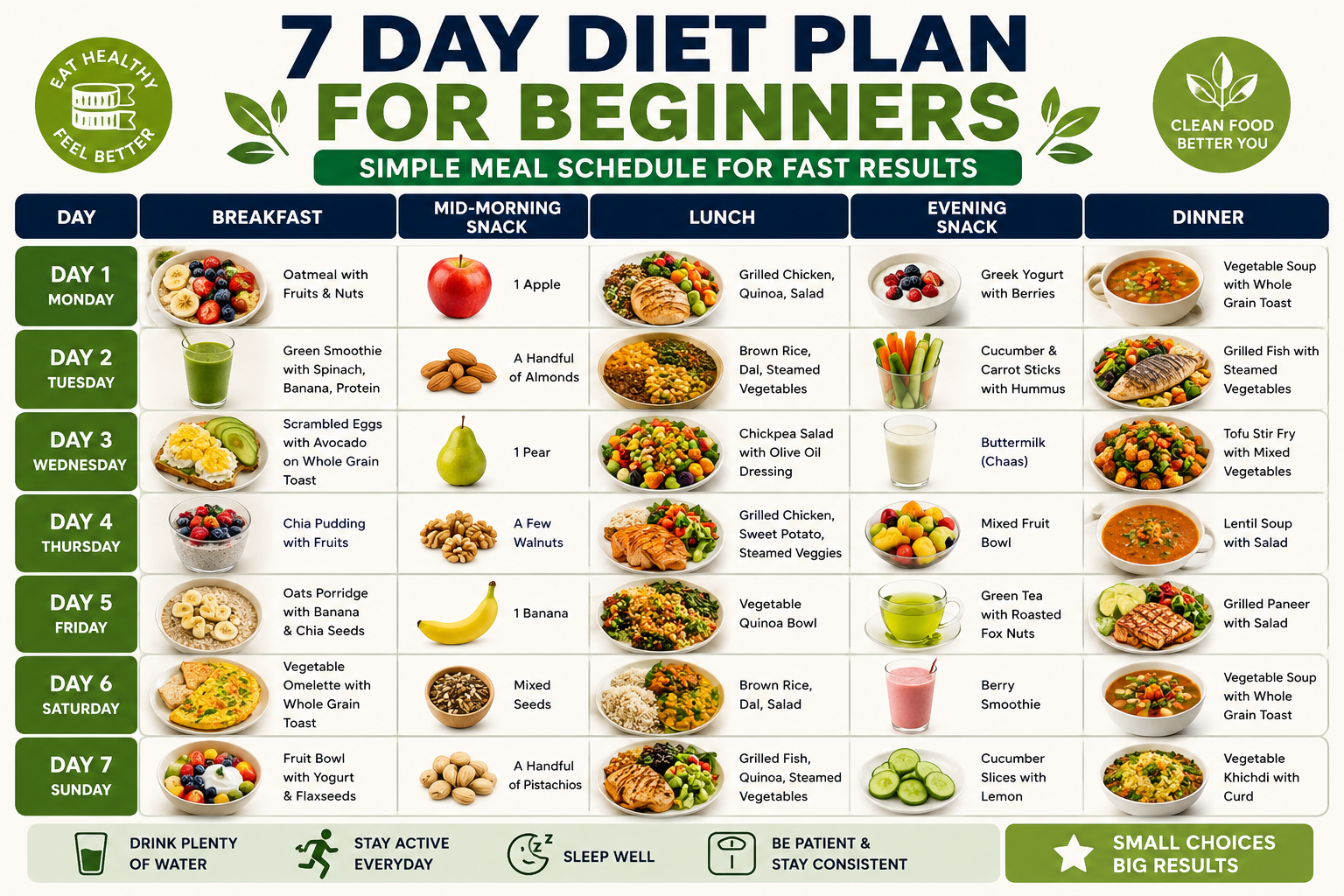
Here is your full 7-day diet plan, laid out day by day. Each day includes breakfast, lunch, a healthy snack, and dinner. All the meals are beginner-friendly, quick to prepare, and designed to keep you satisfied. So, let us go through each day step by step.
Day 1 Monday: Fresh Start Day
- Breakfast: 2 boiled eggs + 1 slice of brown toast + a cup of green tea
- Lunch: Grilled chicken salad with a light olive oil and lemon dressing
- Snack: 1 fresh apple or a small handful of unsalted nuts
- Dinner: Brown rice + boiled mixed vegetables + a bowl of lentil soup
Day 2 Tuesday: Energy Boost Day
- Breakfast: Oatmeal topped with banana slices + black coffee without sugar
- Lunch: Whole wheat roti + dal (lentil curry) + a side of cucumber salad
- Snack: A small bowl of low-fat plain yogurt
- Dinner: Baked fish + steamed broccoli + a small serving of quinoa
Day 3 Wednesday: Midweek Reset
- Breakfast: Green smoothie made with spinach, banana, and almond milk
- Lunch: Grilled vegetable and hummus wrap in a whole wheat tortilla
- Snack: A small handful of mixed seeds (pumpkin, sunflower, flax)
- Dinner: Low-oil chicken curry + a serving of brown rice
Day 4 Thursday: Light and Clean Day
- Breakfast: Scrambled eggs with sauteed spinach and a pinch of black pepper
- Lunch: A warming bowl of lentil soup + two slices of whole wheat bread
- Snack: 1 orange or 1 pear
- Dinner: Stir-fried tofu + mixed colorful vegetables + a small bowl of millet
Day 5 Friday: Fibre Focus Day
- Breakfast: Whole grain cereal + a small glass of skimmed milk
- Lunch: Chickpea salad with tomatoes, cucumber, onion, and fresh lemon dressing
- Snack: Sticks of cucumber and carrot with a small spoon of hummus
- Dinner: Grilled salmon fillet + baked sweet potato + steamed leafy greens
Day 6 Saturday: Flexible Prep Day
- Breakfast: Poha (flattened rice) with mustard seeds, peas, and green chutney
- Lunch: Brown rice + mixed vegetable sabzi (stir-fry) + a small bowl of raita
- Snack: A small handful of walnuts
- Dinner: Homemade vegetable soup + 2 whole wheat rotis
Day 7 Sunday: Recovery and Recharge Day
- Breakfast: Oats-based banana pancakes (no flour, no sugar) + herbal tea
- Lunch: Grilled chicken breast + a side salad + one medium baked potato
- Snack: A colourful low-sugar fruit bowl (watermelon, papaya, berries)
- Dinner: Dal khichdi (lentils and rice cooked together) + steamed vegetables

Calorie Breakdown Per Day
Here is a rough idea of how many calories each part of your day will contain. Remember, these are estimates and will vary slightly based on exact portion sizes and food choices.
|
Meal |
Approximate Calories |
Main Nutrients Provided |
|
Breakfast |
250 – 350 kcal | Protein, fibre, B vitamins |
| Lunch | 350 – 450 kcal |
Complex carbs, protein, healthy fats |
|
Afternoon Snack |
100 – 150 kcal | Fibre, minerals, natural sugars |
| Dinner | 300 – 400 kcal |
Protein, vegetables, complex carbs |
|
Daily Total |
1,000 – 1,350 kcal | Balanced macronutrients throughout |
Meal Prep for Weight Loss: Tips That Actually Work
Meal prep for weight loss simply means getting your food ready in advance. Think of it as working smarter, not harder. When everything is already prepped and ready to go, you are far less likely to order a pizza at 8 pm because you are tired and have nothing to eat.
So, how do you actually do it? Choose one day most people pick Sunday and spend about an hour preparing. Boil your eggs, cook a big batch of brown rice or quinoa, chop your vegetables, and store everything in airtight containers in the fridge. Consequently, putting together a healthy meal during the week takes only about five minutes.
Furthermore, meal prep for weight loss also saves you money. When you plan and buy only what you need, there is far less food waste. Additionally, having healthy food already prepared removes the temptation to eat processed snacks or takeaway. Therefore, if you can commit to just one hour of prep on the weekend, the rest of your week becomes dramatically easier.
What to Eat and What to Avoid
Here is a simple breakdown to keep in mind throughout the week. Stick to the first column as much as possible, limit the middle column, and try to completely cut out the third column for the best results.
|
Eat Freely |
Eat in Moderation | Avoid Completely |
| Leafy greens (spinach, kale) | Brown rice and whole wheat bread |
Sugary fizzy drinks and sodas |
|
Eggs, grilled chicken, fish |
Low-fat dairy products | Deep-fried chips and snacks |
| Lentils, chickpeas, beans | Bananas and sweet fruits |
White bread and refined flour |
|
Unsalted nuts and seeds |
Sweet potatoes | Packaged biscuits and cakes |
|
Water, green tea, herbal tea |
Fresh-squeezed fruit juice |
Alcohol and energy drinks |
| Cucumbers, tomatoes, peppers | Boiled potatoes |
Instant noodles and fast food |
How to Stay Consistent With Your Healthy Eating Schedule
Here is the truth: the biggest reason people fail at diets is not that they choose the wrong foods. It is because they could not stay consistent. So, let us talk about that. First of all, set fixed meal times and stick to them every day. Because your body loves routine, eating at the same time each day helps regulate hunger hormones naturally.
Moreover, try writing down what you eat each day. It does not have to be a detailed log just a quick note on your phone. As a result, you become more aware of your habits and patterns. Additionally, if you slip up and eat something unhealthy, do not punish yourself. Simply get back on track at your very next meal. Therefore, remember that one bad meal does not ruin a diet, just like one healthy meal does not fix an unhealthy lifestyle.
Furthermore, keep healthy snacks visible and junk food out of sight. It sounds obvious, but it truly makes a huge difference. Consequently, when hunger strikes between meals, you will automatically reach for the fruit or nuts on the counter rather than a bag of crisps you have to search for.
What Results Can You Expect After One Week?
After finishing this one-week diet plan, most beginners notice they feel lighter, less bloated, and more energetic. In terms of actual weight loss, you can realistically expect to lose between 1 and 3 kilograms in the first week. However, it is important to know that a big portion of this is water weight and reduced bloating, not pure fat.
Fat loss happens more gradually typically around 0.5 to 1 kg per week when you maintain a consistent calorie deficit. Moreover, you might notice your skin looking clearer as you cut out sugar and processed foods. Furthermore, your sleep quality often improves too, as your body is not working overtime to digest heavy, oily food late at night.
Consequently, after just one week, most people feel motivated enough to keep going. Therefore, think of this not as a short-term diet but as the start of a long-term lifestyle change. The habits you build this week are the foundation of your healthier future.

Frequently Asked Questions
Here are the ten most common questions from beginners starting a 7-day diet plan, answered in simple and practical language.
Q1. Can I follow this 7-day diet plan without doing any exercise?
Yes, you absolutely can follow this plan without exercising and still see real results. Diet alone is responsible for about 70 to 80 per cent of weight loss success. When you cut out sugar, eat clean, and control your portions, your body naturally starts burning stored fat. However, even adding a short 20-minute walk every day will noticeably speed up your progress. Exercise also helps your mood and energy levels, making it easier to stick to the diet. If you are a complete beginner, start with just the diet. Once you feel comfortable and confident, gradually add light movement. A gentle walk after dinner is a fantastic, low-pressure way to begin. Therefore, do not feel pressured to hit the gym from day one. Even small amounts of daily movement, combined with this eating plan, will deliver visible and sustainable results over time.
Q2. How much weight can I realistically lose in one week?
Most beginners following this plan can expect to lose between 1 and 3 kilograms in the first week. However, it is important to understand that a large part of this initial drop is water weight and reduced bloating rather than pure body fat. Actual fat loss tends to happen at a steadier pace of around 0.5 to 1 kilogram per week when you consistently maintain a calorie deficit. Therefore, do not feel discouraged if the scale does not show a dramatic drop after day seven. Additionally, results vary depending on your starting weight, age, activity level, and how strictly you follow the plan. Many people also notice that their clothes fit better and their energy improves before the scale reflects much change. Consequently, try measuring your progress in multiple ways, not just the number on the scale. How you feel matters just as much.
Q3. Is this diet plan suitable for people with diabetes?
This plan is generally well-suited for people managing type 2 diabetes, since it focuses on low-sugar, high-fibre, and protein-rich foods. The meals are built around complex carbohydrates like brown rice, oats, lentils, and whole wheat, which release energy slowly and do not cause sharp blood sugar spikes. Furthermore, the plan cuts out sugary drinks, white bread, and refined foods that are particularly harmful for diabetic individuals. However, you must consult your doctor or a registered dietitian before starting any new diet if you have diabetes. Every person’s condition is different, and your doctor may need to adjust portion sizes, specific foods, or meal timing for your needs. Additionally, monitor your blood sugar readings carefully during the first week so you can track how your body responds to the new eating pattern.
Q4. Can I swap or substitute foods in this meal plan?
Yes, substitutions are completely fine and actually encouraged in this plan, especially when certain ingredients are not available where you live or simply do not suit your taste. The most important rule when substituting is to replace foods with options from the same nutritional category. For example, if the plan includes brown rice and you do not have it, quinoa, millet, or barley are excellent alternatives with similar nutritional profiles. Similarly, if you do not eat fish, grilled chicken, paneer, or tofu works just as well as a protein source. Vegetarians and vegans can swap any meat with lentils, chickpeas, kidney beans, or Greek yogurt. The goal of this plan is balanced nutrition, not rigid adherence to a specific ingredient list. Therefore, feel free to adapt the meals to match your personal preferences, cultural food traditions, and what is actually available and affordable in your area.
Q5. How many calories should I aim for each day?
This plan keeps your daily calorie intake between roughly 1,000 and 1,350 calories per day. This creates a healthy calorie deficit for most adults that encourages gradual, sustainable weight loss. However, the right calorie target depends on your age, height, current weight, activity level, and overall health goals. Generally speaking, women typically need around 1,200 to 1,500 calories per day for weight loss, while men may need between 1,500 and 1,800. Therefore, if you feel genuinely weak, lightheaded, or extremely hungry on this plan, it is perfectly fine to slightly increase your portion sizes. Your body is telling you it needs a little more fuel. Furthermore, if you have a very physically demanding job or exercise regularly, you will definitely need more calories to function well. The meals in this plan are nutrient-dense, so most people feel satisfied despite the lower calorie count.
Q6. What drinks can I have during this diet?
The best drinks during this plan are plain water, green tea, black coffee without sugar, herbal teas like chamomile or peppermint, and fresh lemon water. Of these, water is by far the most important. Drinking 8 to 10 glasses per day is one of the single most powerful things you can do for weight loss. It keeps you full between meals, flushes toxins from your body, and supports your metabolism. Green tea is also highly recommended as it contains antioxidants and natural compounds that have been shown to support fat burning. On the other hand, you should completely cut out fizzy soft drinks, fruit juices with added sugar, energy drinks, and alcohol. Furthermore, avoid adding sugar or honey to your tea and coffee. If plain water feels boring, try adding slices of lemon, cucumber, or fresh mint leaves to make it more refreshing.
Q7. Can vegetarians follow this 7-day diet plan?
Absolutely. This plan is very easy to adapt for vegetarians and even vegans. Most of the meals are already plant-based or can be made so with simple swaps. Wherever the plan includes chicken or fish, you can replace it with paneer, tofu, boiled eggs, lentils, chickpeas, kidney beans, or Greek yogurt. All of these are excellent protein sources that keep you full for a long time. Interestingly, vegetarians often do even better on this type of plan because plant-based proteins are naturally higher in fibre. This means better digestion, longer-lasting fullness, and often lower overall calorie intake. Furthermore, plant proteins tend to be lower in saturated fat, which is great for heart health. Therefore, vegetarians following this plan can expect the same or even better results compared to non-vegetarians. Just make sure each meal contains a solid source of protein to maintain energy and muscle mass.
Q8. Do I need to take any supplements with this plan?
For most healthy adults, this plan provides a sufficient range of nutrients without requiring additional supplements. The meals are carefully balanced with proteins, complex carbohydrates, healthy fats, fiber, and a wide range of vitamins from vegetables and fruits. However, certain groups of people may benefit from specific supplements. Vegans, for example, should consider taking a vitamin B12 supplement since this nutrient is almost exclusively found in animal products. People who spend little time outdoors may also be low in vitamin D and might benefit from supplementation. Additionally, women of reproductive age are often advised to take a daily folate supplement regardless of their diet. Therefore, it is always a good idea to have a simple blood test done to check for any deficiencies before spending money on supplements. This way, you take only what your body actually needs.
Q9. What should I do if I feel hungry between meals?
Yes, you can absolutely repeat this 7-day diet plan for two to four weeks in a row. In fact, many beginners find that repeating the same plan makes things even easier. You already know what to buy, how to prep it, and what to expect from each meal. Repetition builds routine, and routine is what makes healthy eating sustainable long-term. However, if the same meals start to feel boring, make small adjustments each week. Try swapping your protein sources, experimenting with different vegetables, or adding new herbs and spices for variety. Furthermore, as your fitness improves and your body adapts, you may want to increase your portions or slightly increase your physical activity. After the first month, consider speaking with a nutritionist to build a more personalised long-term eating plan tailored specifically to your goals. Think of this week as your foundation.
Final Thoughts
Starting a 7-day diet plan is honestly one of the best decisions you can make for your health right now. It does not require a gym membership, expensive superfoods, or hours of cooking. What it does require is a little planning, a willingness to try, and the commitment to stick with it for seven days.
Moreover, the habits you build this week do not disappear on the weekends. Eating more vegetables, drinking more water, controlling portions, and cutting out sugar are habits that your future self will genuinely thank you for. Furthermore, as you start to feel the results, more energy, better sleep, a flatter tummy, clearer skin, staying motivated becomes a whole lot easier.
Therefore, start today. Do not wait for Monday, the first of the month, or “the right time.” The right time is right now. Your healthier, lighter, more energetic self is just one week away.

GIPHY App Key not set. Please check settings