
 Admin
Admin
Introduction
I remember the first month after I switched to a vegan diet. My energy went up. My skin cleared up. But I also noticed something else. My digestion changed completely. Sometimes I felt amazing. Other times I was bloated and uncomfortable. I had no idea what was happening inside my gut.
It turns out, the answer was fiber. Specifically, I was not eating the right kinds of fiber in the right ways. Once I understood how fiber works in a plant-based diet, everything changed. My gut felt better. I had more energy. And I stopped feeling bloated after meals.
In this article, I am going to share everything I learned. We will talk about why the vegan diet is one of the best things you can do for your gut health, why fiber is the key ingredient, and exactly how to make it work for you. By the end, you will understand your gut better than most people ever do.
1. What is gut health and why does it matter?
Your gut is much more than just a tube that digests food. Inside your intestines, there are trillions of tiny microorganisms including bacteria, viruses, and fungi that all live together. This community is called the gut microbiome. And it is incredibly important.
Scientists now know that your gut microbiome affects almost every part of your health. It influences your immune system. Your mood and mental health are directly affected by it. It helps control inflammation in your body. It even plays a role in your weight and metabolism. A healthy, diverse gut microbiome is linked to lower risks of heart disease, diabetes, depression, and even some cancers.
On the other hand, a disrupted gut microbiome with too many bad bacteria and not enough good ones is linked to bloating, constipation, fatigue, poor immunity, and chronic disease. Taking care of your gut is genuinely one of the most important things you can do for your overall health.
2. How a vegan diet transforms your gut health
Here is the exciting part. Research consistently shows that people who follow a vegan diet have more diverse and healthier gut microbiomes than people who eat meat and dairy. A 2023 study published in the journal Cell Host and Microbe found that plant-based eaters had significantly higher levels of beneficial gut bacteria compared to omnivores.
Why does this happen? The main reason is fiber. Plant foods are packed with fiber. Animal products contain zero fiber. When you switch to a vegan diet, your fiber intake naturally goes up, sometimes dramatically. And fiber is exactly what your good gut bacteria love to eat.
A vegan diet is also rich in polyphenols. These are natural plant compounds found in berries, dark leafy greens, olive oil, nuts, and seeds. Polyphenols act as food for beneficial gut bacteria and help reduce inflammation in the gut lining. A well-planned vegan diet creates the perfect environment for a thriving gut microbiome.
3. What is fiber and why is it your secret weapon?
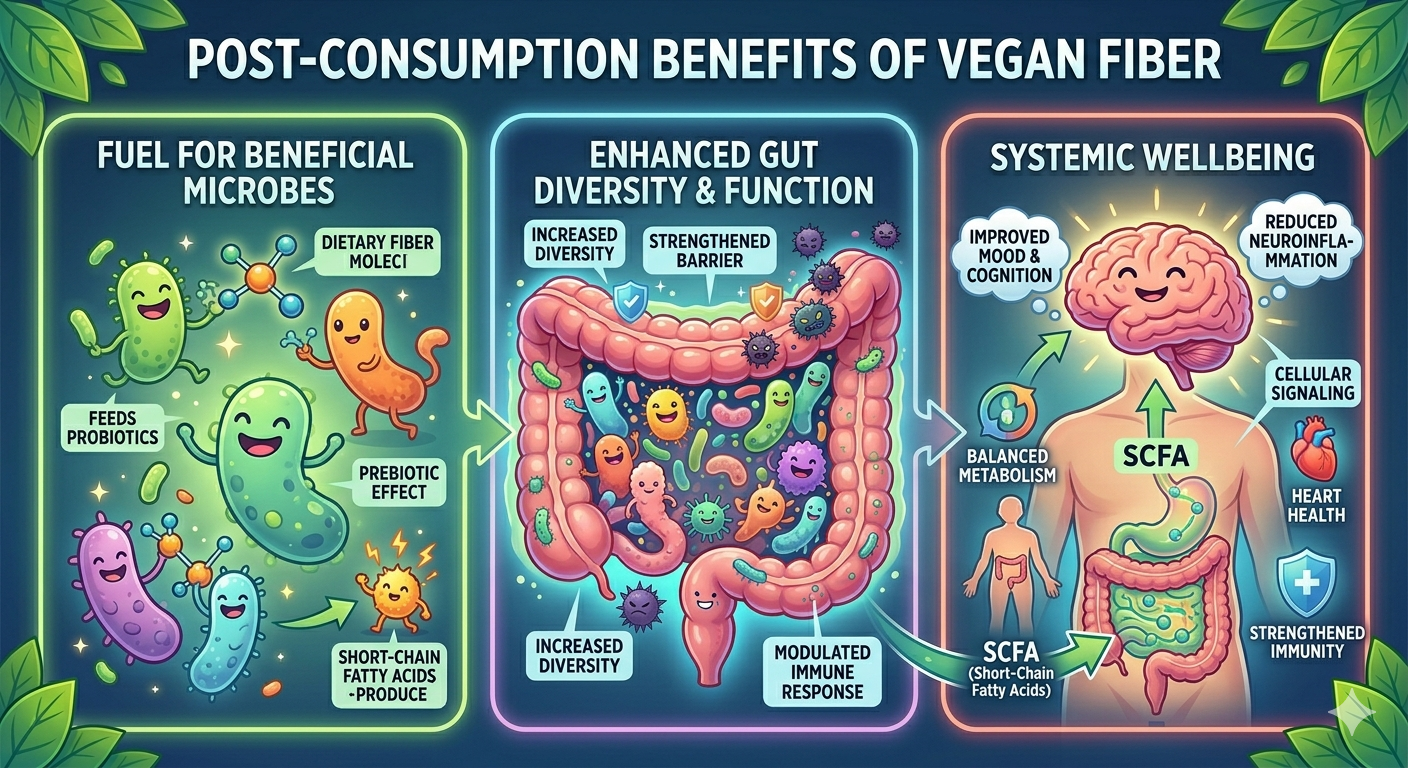
Fiber is a type of carbohydrate that your body cannot digest. Unlike sugar or starch, fiber passes through your stomach and small intestine without being broken down. When it reaches your large intestine, something remarkable happens. Your gut bacteria ferment the fiber and turn it into compounds called short-chain fatty acids (SCFAs).
Short-chain fatty acids are incredibly beneficial. They feed the cells lining your gut wall, keeping that wall strong and healthy. They reduce inflammation. They help regulate your blood sugar. And they even send signals to your brain that affect your mood and appetite. When your gut bacteria eat fiber, the whole body benefits.
There are two main types of fiber and you need both. Soluble fiber dissolves in water and forms a gel-like substance in your gut. It feeds beneficial bacteria and helps lower cholesterol. Insoluble fiber does not dissolve. Instead, it adds bulk to your stool and keeps things moving smoothly through your intestines. A good vegan diet naturally provides plenty of both.
Two types of fiber: What they do and where to find them
| Fiber Type | What It Does | Best Vegan Food Sources | Daily Target |
|---|---|---|---|
| Soluble Fiber | Feeds good gut bacteria, lowers cholesterol, stabilizes blood sugar | Oats, apples, beans, lentils, flaxseeds, chia seeds | 10 to 15g per day |
| Insoluble Fiber | Adds bulk to stool, prevents constipation, speeds gut transit | Whole wheat, brown rice, kale, carrots, corn, nuts | 15 to 25g per day |
| Total Fiber Goal | Overall gut health, microbiome diversity, disease prevention | All whole plant foods | 25 to 38g per day |
4. The best high-fiber foods for your vegan diet
One of the best things about a vegan diet is that high-fiber foods are absolutely everywhere. You do not need special supplements or expensive products. You just need to know which plant foods pack the most fiber. Here are the top categories.
4.1 Legumes: The fiber champions
Lentils, chickpeas, black beans, kidney beans, and edamame are among the richest fiber sources on the planet. A single cup of cooked lentils gives you about 15 grams of fiber. That is already more than half of many people’s daily target in just one food. Legumes are also rich in protein, iron, and zinc, making them absolute superfoods for vegans.
- Black beans: 15g fiber per cup
- Lentils: 15g fiber per cup
- Chickpeas: 12g fiber per cup
- Edamame: 8g fiber per cup
4.2 Whole grains: Fuel and fiber together
Switching from refined grains like white bread and white rice to whole grains is one of the easiest ways to boost your fiber intake. Whole grains keep the outer bran layer of the grain, which is where most of the fiber lives. Whole grains also contain prebiotic fibers that specifically feed beneficial Bifidobacterium bacteria in your gut.
- Oats: 4g fiber per cup cooked
- Quinoa: 5g fiber per cup cooked
- Brown rice: 3.5g fiber per cup cooked
- Whole wheat bread: 2g fiber per slice
4.3 Vegetables: Colorful and full of gut-loving fiber
Vegetables are not just vitamins and minerals. Many vegetables are excellent sources of fiber, especially when eaten with the skin on. Cruciferous vegetables like broccoli, Brussels sprouts, and cauliflower are particularly good for the gut. They contain a special type of fiber that promotes the growth of diverse gut bacteria.
- Artichokes: 10g fiber each, one of the highest of any vegetable
- Broccoli: 5g fiber per cup
- Carrots: 3.5g fiber per medium carrot
- Sweet potato: 4g fiber per medium potato
4.4 Fruits: Sweet, delicious, and surprisingly fibrous
Fruit gets a bad reputation sometimes because of its natural sugar content. Whole fruits are also rich in fiber, especially pectin, a type of soluble fiber that is fantastic for gut bacteria. The fiber in whole fruit slows down sugar absorption, which is good for blood sugar balance. Always choose whole fruit over juice, which removes most of the fiber.
- Avocado: 10g fiber per avocado
- Raspberries: 8g fiber per cup
- Pears: 5.5g fiber per pear
- Apples: 4.5g fiber per apple with skin
4.5 Seeds and nuts: Small but mighty
Chia seeds and flaxseeds are especially interesting for gut health. When they absorb water, they form a thick gel-like substance that moves slowly through your gut, feeding bacteria along the way. This gel also helps you feel full for longer. Almonds, walnuts, and sunflower seeds also add meaningful fiber to your day.
- Chia seeds: 10g fiber per ounce
- Flaxseeds: 8g fiber per ounce
- Almonds: 3.5g fiber per ounce
- Sunflower seeds: 3g fiber per ounce
Top 10 high-fiber vegan foods at a glance
| Food | Serving Size | Fiber Content | Bonus Nutrient |
|---|---|---|---|
| Lentils (cooked) | 1 cup | 15g | Protein, Iron |
| Black beans (cooked) | 1 cup | 15g | Protein, Folate |
| Chickpeas (cooked) | 1 cup | 12g | Protein, Zinc |
| Chia seeds | 1 oz (28g) | 10g | Omega-3, Calcium |
| Artichoke | 1 medium | 10g | Vitamin C, Folate |
| Avocado | 1 whole | 10g | Healthy fats, Potassium |
| Raspberries | 1 cup | 8g | Vitamin C, Antioxidants |
| Broccoli | 1 cup | 5g | Vitamin K, Vitamin C |
| Oats (cooked) | 1 cup | 4g | Beta-glucan, Manganese |
| Sweet potato | 1 medium | 4g | Vitamin A, Potassium |
5. Why does a vegan diet sometimes cause bloating and how to fix it
Let me be real with you. When many people first switch to a vegan diet, they experience more bloating and gas than before. This is completely normal and it does not mean the diet is bad for you. It simply means your gut bacteria are adjusting to a new, higher-fiber way of eating.
Your gut microbiome is like a garden. If you suddenly flood it with lots of fiber after years of eating low-fiber foods, it takes time to adapt. The bacteria that ferment fiber need to multiply first. During this adjustment period, excess gas is produced, which causes bloating.
The good news is that this is temporary. Most people find that bloating and gas improve significantly within four to six weeks. Here are some strategies that really help in the meantime.
- Increase fiber gradually. Do not go from low-fiber to very high-fiber overnight. Add one new high-fiber food per week and let your gut adjust slowly.
- Drink more water. Fiber absorbs water and without enough fluid, fiber can cause constipation instead of helping it. Aim for at least 8 glasses of water per day.
- Soak and cook legumes properly. Soaking beans overnight and rinsing them before cooking reduces the compounds that cause gas.
- Eat fermented foods. Tempeh, miso, kimchi, sauerkraut, and non-dairy yogurt add beneficial bacteria to your gut, helping it adapt faster.
- Chew your food thoroughly. Digestion starts in the mouth. Chewing well reduces the work your gut has to do and minimizes bloating significantly.
6. Prebiotics and probiotics: The gut health power couple in a vegan diet
You have probably heard the words prebiotic and probiotic. They sound similar but do very different things. Understanding both is key to getting the most out of your vegan diet for gut health.
What are probiotics?
Probiotics are live beneficial bacteria. When you eat them, they add more good bacteria to your gut microbiome. Great vegan sources include tempeh, miso, sauerkraut, kimchi, kombucha, and plant-based yogurt with live cultures.
What are prebiotics?
Prebiotics are the food that your existing gut bacteria eat. They are mostly found in high-fiber plant foods. When you eat prebiotics, you are feeding and growing the good bacteria already living in your gut. Great vegan prebiotic foods include garlic, onions, leeks, asparagus, bananas, oats, and chicory root.
Together, prebiotics and probiotics work as a team. Probiotics bring in new beneficial bacteria. Prebiotics feed and strengthen them. A vegan diet naturally provides enormous amounts of prebiotic fiber, giving your gut bacteria a constant source of nourishment.
7. Sample one-day high-fiber vegan meal plan for gut health
| Meal | What to Eat | Approx. Fiber |
|---|---|---|
| Breakfast | Oat porridge with chia seeds, raspberries, and a sliced banana | 12g |
| Mid-Morning Snack | Apple with almond butter | 6g |
| Lunch | Lentil soup with whole grain bread and a side salad with avocado | 18g |
| Afternoon Snack | Hummus with carrot and celery sticks | 5g |
| Dinner | Black bean tacos with brown rice, sautéed kale, and salsa | 16g |
| Evening | A small bowl of mixed berries with plant-based yogurt with live cultures | 5g |
| Total | 62g (well above the 38g daily target) |
8. The gut-brain connection: How your vegan diet affects your mood
Here is one of the most fascinating things about gut health. Your gut and your brain are directly connected through a pathway called the gut-brain axis. This is a two-way communication highway between your intestines and your brain. What happens in your gut truly affects how you think and feel.
About 90 percent of your body’s serotonin, the feel-good hormone, is actually produced in your gut rather than your brain. Your gut bacteria play a major role in producing serotonin and other neurotransmitters. When your gut microbiome is healthy and diverse, your mood tends to be more stable and positive.
Research published in the journal Nature Microbiology found that people with higher levels of certain gut bacteria were significantly less likely to experience depression. Because a vegan diet supports a diverse, fiber-rich gut microbiome, it may also support better mental health over time. This is an exciting area of research that scientists are only beginning to fully understand.
9. Common gut health mistakes vegans make and how to avoid them
Even with the best intentions, some vegans unknowingly make choices that hurt their gut health. Here are the most common mistakes and simple fixes.
- Eating too many processed vegan foods. Vegan junk food like vegan burgers, chips, and packaged sweets is often low in fiber and high in additives. These foods can disrupt your gut microbiome just like regular junk food does. Always prioritize whole plant foods over processed alternatives.
- Not eating enough variety. Research shows that eating 30 or more different plant foods per week is associated with the most diverse gut microbiomes. Eating the same five vegetables every day leads to less diverse gut bacteria over time. Mix it up regularly.
- Forgetting fermented foods. Many vegans focus on fiber but forget about probiotics. Adding fermented foods like tempeh, kimchi, miso, and kombucha a few times a week makes a big difference to gut diversity.
- Drinking too little water. Fiber needs water to work properly. Without enough hydration, even a high-fiber vegan diet can cause constipation instead of improving digestion.
- Jumping to high fiber too fast. This is the most common reason for painful bloating when starting a vegan diet. Go slowly, increase fiber gradually, and give your gut time to adapt properly.

10. Final thoughts: Let fiber transform your gut and your life
I started this article by telling you about my early days on a vegan diet, the confusion, the bloating, and the eventual breakthrough when I understood fiber. Now that you have read this guide, you have a clear picture of what is actually happening inside your gut and how to make your plant-based diet work at its very best.
Fiber is not complicated. It is simply plant food in its most natural form. Every bean, grain, vegetable, fruit, seed, and nut you eat is a gift to your gut bacteria. When your gut bacteria are happy, your whole body benefits, from your immune system to your mood to your long-term disease risk.
Start simple. Eat more legumes. Choose whole grains over refined ones. Add some fermented foods to your weekly routine. Drink plenty of water. Give your gut the time it needs to adapt and thrive.
Your gut is working hard for you every single day. Give it the fiber it deserves and it will take care of everything else.
11. Frequently asked questions: Vegan diet and gut health
1: Does a vegan diet really improve gut health?
Yes, and the science behind it is genuinely exciting. Multiple large studies have confirmed that people who follow a vegan diet have more diverse and beneficial gut microbiomes compared to people who eat meat. The main reason is fiber. Plant foods are the only dietary source of fiber, and fiber is the primary fuel for the good bacteria living in your large intestine. When your good bacteria are well-fed and thriving, they produce short-chain fatty acids that strengthen your gut wall, reduce inflammation, and support your immune system. A 2022 study from Stanford University found that a plant-based diet increased microbiome diversity more effectively than a high-fermented-food diet alone. A vegan diet is also naturally low in saturated fat and high in polyphenols, both of which are beneficial for gut health. The benefits are real, well-documented, and can start showing up within just a few weeks of changing your diet.
2: How much fiber does a vegan diet typically provide?
A well-planned vegan diet typically provides between 40 and 70 grams of fiber per day. This is significantly higher than the average person eating a typical Western diet, who gets only about 15 grams daily. The official recommended daily intake is 25 grams for women and 38 grams for men, though many gut health researchers believe the optimal amount for microbiome diversity is closer to 40 to 50 grams per day. The reason vegans get so much fiber naturally is that every whole plant food contains it. Beans, lentils, whole grains, vegetables, fruits, nuts, and seeds all contribute meaningfully. The key is choosing whole foods over processed vegan alternatives. A whole grain bowl with legumes and vegetables can easily provide 20 to 25 grams of fiber in a single meal.
3: Why am I so bloated after switching to a vegan diet?
This is the number one question I get from new vegans, and the frustration is completely understandable. The short answer is that your gut microbiome is going through a major transition. When you increase your fiber intake dramatically, which almost everyone does when going vegan, your existing gut bacteria have to work harder to ferment all that extra fiber. Gas is a natural byproduct of this fermentation process, and during the adjustment period you may produce more gas than usual. This causes bloating and discomfort. The good news is that this is temporary. Research suggests most people’s guts adapt within four to six weeks. The key is to increase fiber gradually rather than all at once. Start by adding one new high-fiber food per week. Soak and rinse legumes before cooking. Drink plenty of water. Add probiotic-rich fermented foods like tempeh or kimchi to help introduce the bacteria that digest fiber most efficiently.
4: What are the best fermented foods for vegans?
Fermented foods are fantastic additions to a vegan diet because they introduce live beneficial bacteria directly into your gut. The best options for vegans include tempeh, a fermented soy product with a firm texture and nutty flavor that is also a great source of protein. Miso is a fermented soybean paste that adds deep umami flavor to soups and dressings. Kimchi is a Korean fermented vegetable dish, traditionally made with cabbage and spices. Make sure to choose vegan kimchi as some traditional versions contain fish sauce. Sauerkraut is fermented cabbage and is very easy to find or make at home. Kombucha is a fermented tea drink that is widely available in most supermarkets. Plant-based yogurts with live cultures are also excellent, though the live bacteria content varies between brands. Look specifically for labels that say “contains live and active cultures.” Aim to eat at least one or two servings of fermented food per day for the greatest gut health benefit.
5: Can a vegan diet help with irritable bowel syndrome (IBS)?
For many people with IBS, a vegan diet can be very helpful, but it depends on which type of IBS you have and how you structure your diet. IBS comes in several forms including IBS with constipation, IBS with diarrhea, and mixed IBS. For people with constipation-dominant IBS, the high fiber content of a vegan diet often helps significantly by adding bulk to stools and keeping things moving. For people with diarrhea-dominant IBS, suddenly increasing fiber can sometimes make symptoms worse in the short term. Many high-fiber vegan foods are also high in FODMAPs, which are fermentable carbohydrates that can trigger IBS symptoms in sensitive individuals. Foods like onions, garlic, apples, and beans are common culprits. If you have IBS and want to try a vegan diet, working with a registered dietitian who specializes in gut health is strongly recommended. They can help you find the right balance of fiber and FODMAPs for your specific situation.
6: How does fiber affect gut bacteria specifically?
Fiber acts as food for your gut bacteria and is specifically called prebiotic fiber. When fiber reaches your large intestine undigested, the bacteria there ferment it through a process similar to how yeast ferments sugar to make beer. This fermentation produces several important compounds. The most important are short-chain fatty acids including butyrate, propionate, and acetate. Butyrate is particularly beneficial because it is the primary energy source for the cells lining your colon wall. It helps keep the gut wall strong and intact, preventing a condition called leaky gut where unwanted substances pass through the gut wall into the bloodstream. Propionate helps regulate blood sugar and cholesterol levels. Acetate is used by other bacteria and also helps reduce appetite. Different types of fiber feed different species of bacteria, which is why eating a wide variety of high-fiber plant foods creates a more diverse and resilient gut microbiome.
7: Is it possible to eat too much fiber on a vegan diet?
Technically yes, though it is less common than most people think. Most vegans do not eat too much fiber. They eat the right amount. However, if fiber intake becomes extremely high above 70 to 80 grams per day, some people experience ongoing bloating, gas, and reduced absorption of certain minerals like calcium, iron, and zinc. This happens because very high fiber intakes can bind to these minerals in the digestive tract and carry them out of the body before they are absorbed. For most healthy adults eating a balanced vegan diet, this is not a concern. If you are adding fiber supplements on top of an already high-fiber vegan diet, it might be worth checking your mineral levels with a blood test. Eating fiber from whole foods is always safer than relying on supplements, because whole foods come packaged with the vitamins and minerals that balance the fiber’s effects.
8: Does cooking vegetables reduce their fiber content?
Cooking vegetables does change their fiber slightly, but generally not in a way that makes a significant difference to your health. The total amount of fiber in vegetables stays roughly the same whether they are raw or cooked. What does change is the structure of the fiber. Cooking softens the fiber, which can actually make it easier for your gut bacteria to ferment. Cooked vegetables may in some ways be even better for your microbiome than raw ones, particularly for people with sensitive digestive systems. Some cooking methods can cause small losses in certain nutrients. Boiling vegetables in a lot of water and discarding that water loses some water-soluble vitamins. Steaming, roasting, or stir-frying are better methods that preserve more nutrients overall. The most important thing is to eat your vegetables in whatever way you enjoy them and will eat consistently. The best cooking method is always the one that gets vegetables onto your plate regularly.
9: How long does it take to see gut health improvements on a vegan diet?
The timeline varies from person to person, but research gives us some useful benchmarks. Studies have shown that the gut microbiome can begin to shift in response to dietary changes within just 24 to 48 hours. Most people who switch to a whole-food vegan diet report noticeable improvements in digestion and energy within two to four weeks. Bloating and gas, which often increase initially, typically improve within four to six weeks as the gut adapts. More significant changes in gut microbiome diversity take longer, usually three to six months of consistent eating. Long-term benefits such as reduced inflammation, improved immune function, and better mood stability may take six months to a year to fully develop. The key is consistency. Your gut responds to what you eat every single day, so the more consistently you follow a fiber-rich vegan diet, the faster and more lasting the improvements will be.
10: Do I need probiotic supplements on a vegan diet?
For most healthy vegans who eat a varied, whole-food plant-based diet, probiotic supplements are not strictly necessary. A good vegan diet naturally provides enormous amounts of prebiotic fiber, which feeds and grows the beneficial bacteria already living in your gut. If you are also eating fermented foods regularly including tempeh, miso, kimchi, sauerkraut, kombucha, or plant-based yogurt with live cultures, you are already getting a natural supply of probiotics from food. Probiotic supplements can be helpful in specific situations. If you have recently taken antibiotics, your gut bacteria have likely been significantly disrupted, and a probiotic supplement can help restore balance faster. If you have a specific digestive condition like IBS or inflammatory bowel disease, targeted probiotic strains may help, but always consult a doctor first as the right strain matters enormously. For general gut health maintenance on a vegan diet, focus on diverse whole foods and fermented foods before spending money on supplements.

GIPHY App Key not set. Please check settings