
 Admin
Admin
Introduction
If you have ever tried a 1200 calorie diet plan, you probably know how challenging it can feel at first. However, with the right strategies, you can absolutely follow this plan without constant hunger. In fact, thousands of people successfully lose weight on a 1200 calorie meal plan every day and they do it comfortably. The key is not just eating less, but eating smarter.
In this article, you will discover everything you need to know about following a low calorie diet effectively, including meal ideas, hunger-fighting tips, and a practical daily guide. So, let us get started.
What Is a 1200 Calorie Diet Plan?
A 1200 calorie diet plan is a structured eating approach where your total daily calorie intake is limited to 1,200 calories. This number is generally considered the minimum safe calorie level for most adult women. For men, it may be used under medical supervision, since their baseline calorie needs are typically higher.
The goal of this calorie deficit diet is to create a negative energy balance meaning your body burns more calories than it consumes. As a result, it turns to stored fat for fuel, which leads to gradual, sustainable weight loss.
Furthermore, research shows that a moderate calorie deficit of 500–750 calories per day can lead to roughly 0.5–1 kg of weight loss per week. Therefore, a 1200 calorie diet plan fits well within a safe and effective weight loss strategy for many individuals.
Why Do People Feel Hungry on a Low Calorie Diet?
Before we dive into solutions, it is important to understand why hunger happens in the first place. When you reduce your daily calorie intake, your body produces more of the hunger hormone ghrelin. Additionally, if your meals are poorly planned full of refined carbs and low in fiber or protein you will feel hungry much sooner after eating.
Fortunately, this is completely preventable. By making smart food choices and planning your 1200 calorie diet menu strategically, you can feel full and satisfied all day long.
Top Strategies to Stay Full on a 1200 Calorie Meal Plan
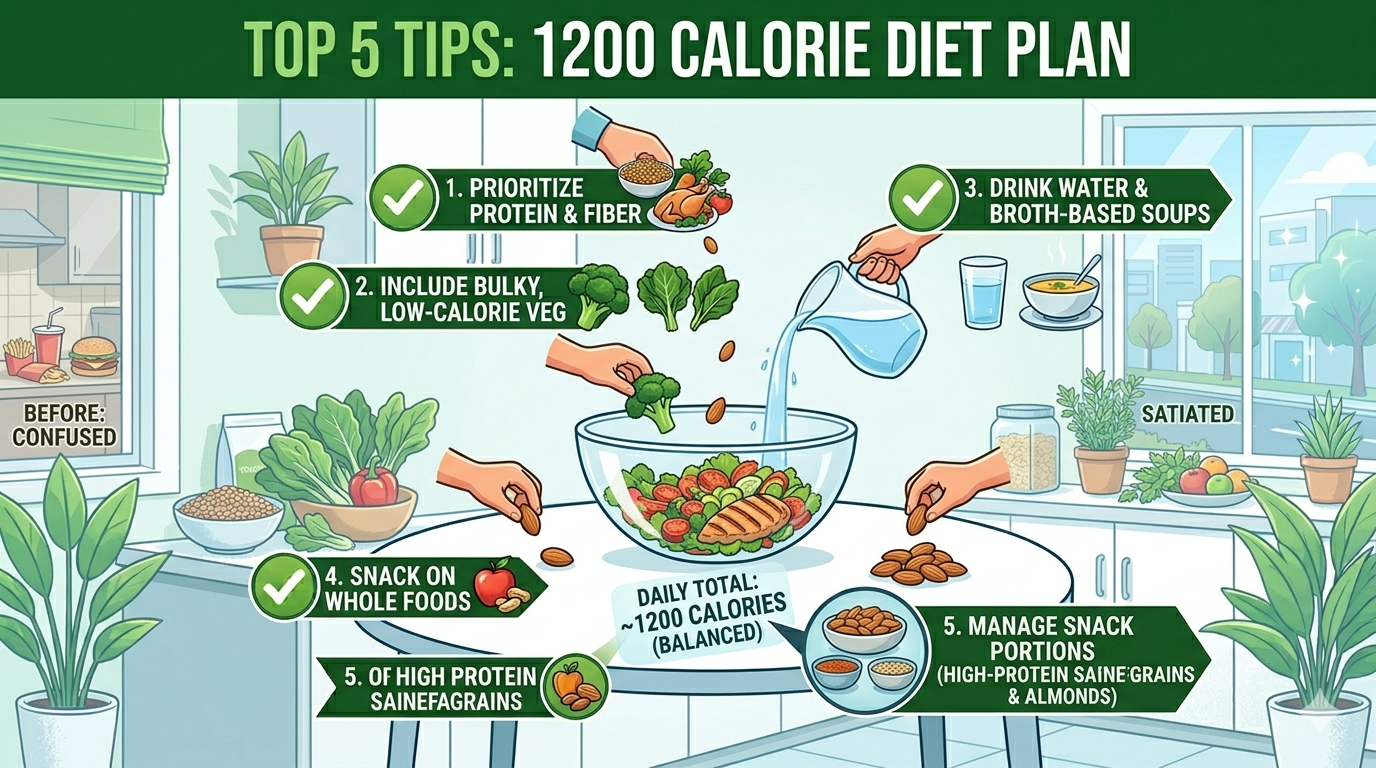
1.Prioritize High-Protein Foods
Protein is the most filling macronutrient. Therefore, every meal in your 1200 calorie meal plan should include a good source of protein. Protein slows digestion, reduces ghrelin levels, and preserves lean muscle mass during weight loss.
Best protein sources for a low calorie diet:
- Eggs (about 70 calories each)
- Chicken breast (about 165 calories per 100g)
- Greek yogurt (about 100 calories per cup)
- Lentils and legumes
- Cottage cheese
Tofu and tempeh
2.Load Up on Fiber-Rich Vegetables
Non-starchy vegetables are your best friends on a calorie deficit diet. They are incredibly low in calories yet high in volume and fiber which means they take up space in your stomach and keep you feeling full for longer.
Vegetables to include freely:
- Spinach, kale, and leafy greens
- Broccoli and cauliflower
- Zucchini and cucumber
- Bell peppers and tomatoes
Cabbage and celery
3.Practice Smart Portion Control
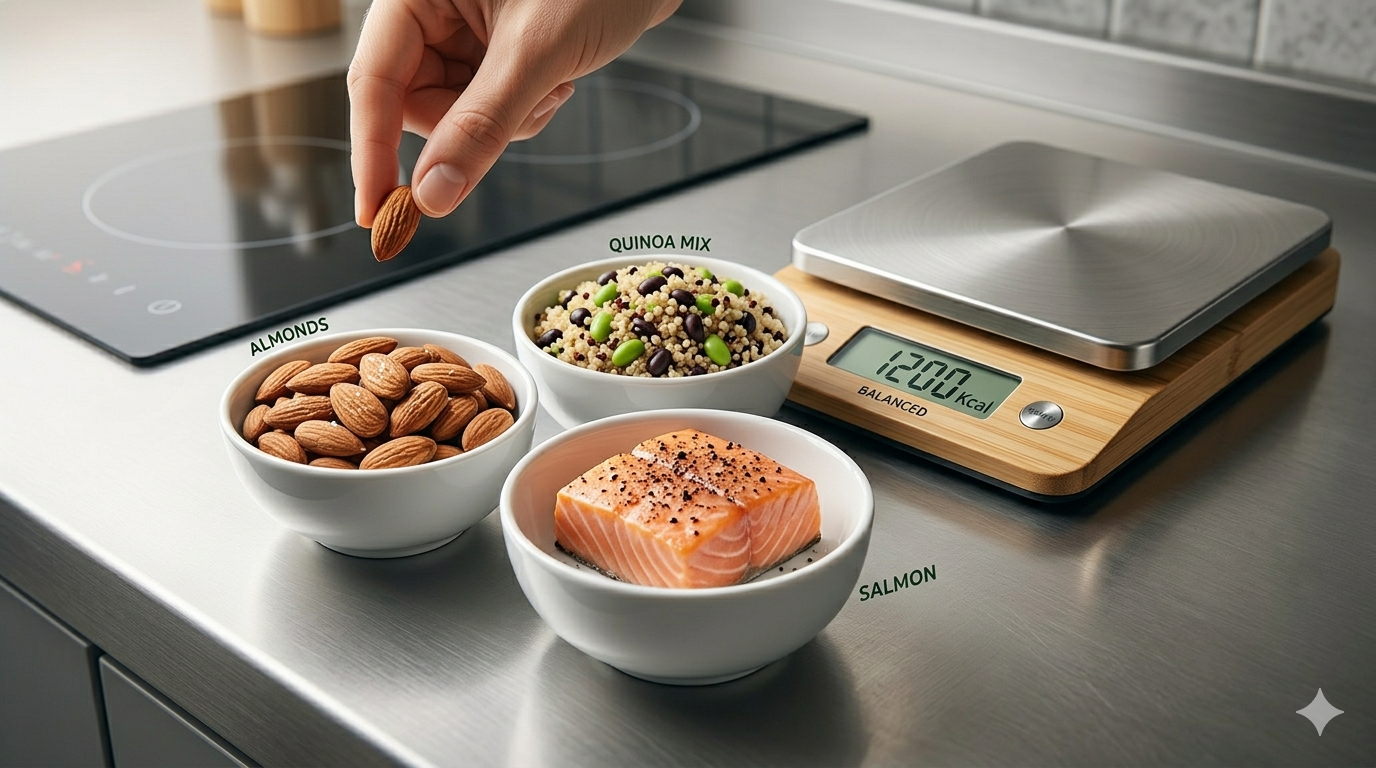
Portion control meals are the foundation of any successful 1200 calorie plan. Even healthy foods can push you over your calorie limit if you eat too much of them. Therefore, measuring your food at least in the beginning is highly recommended.
Use a food scale or measuring cups to track your portions accurately. Apps like MyFitnessPal can also make tracking much easier.
4.Drink Plenty of Water
Thirst is often mistaken for hunger. Consequently, staying well hydrated throughout the day can significantly reduce unnecessary snacking. Aim for at least 8–10 glasses of water daily. Additionally, drinking a large glass of water before meals can reduce appetite and naturally support portion control.
5.Eat More Frequently (But Smaller Meals)
Instead of eating two or three large meals, consider spreading your 1,200 calories across 4–5 smaller meals and snacks. This approach keeps your blood sugar stable, prevents energy crashes, and reduces the urge to overeat at any one sitting.
Sample 1200 Calorie Diet Menu (Full Day)
Below is a practical and satisfying 1200 calorie diet menu that you can follow today:
| Meal | Food Items | Approx. Calories |
| Breakfast | 2 boiled eggs + 1 slice whole grain toast + black coffee | 250 cal |
| Mid-Morning Snack | 1 small apple + 1 tbsp almond butter | 150 cal |
| Lunch | Grilled chicken salad with olive oil dressing + veggies | 350 cal |
| Afternoon Snack | 1 cup Greek yogurt + berries | 150 cal |
| Dinner | Baked salmon + steamed broccoli + ½ cup brown rice | 300 cal |
| Total | ~1200 cal |
Low Calorie Recipes That Keep You Full
Finding low calorie recipes that are both satisfying and delicious is much easier than most people think. Here are some ideas organized by meal:
Breakfast Options:
- Vegetable omelette – 2 eggs + spinach + mushrooms + tomatoes (~200 cal)
- Overnight oats – ½ cup oats + almond milk + chia seeds + berries (~250 cal)
- Greek yogurt parfait – Greek yogurt + granola + mixed fruits (~220 cal)
Lunch Options:
- Turkey lettuce wraps – Ground turkey + lettuce + salsa + avocado (~280 cal)
- Chickpea soup – Chickpeas + tomatoes + garlic + herbs (~300 cal)
- Tuna salad bowl – Canned tuna + cucumber + mixed greens + lemon (~260 cal)
Dinner Options:
- Zucchini noodles with marinara – Zoodles + turkey meat sauce (~280 cal)
- Stir-fried tofu and vegetables – Tofu + bell peppers + soy sauce (~300 cal)
- Baked chicken thighs – With roasted sweet potato and green beans (~320 cal)
Weekly 1200 Calorie Meal Plan Overview
| Day | Breakfast | Lunch | Dinner | Snacks |
| Monday | Omelette + toast | Chicken salad | Baked fish + veggies | Apple + yogurt |
| Tuesday | Overnight oats | Tuna salad bowl | Stir-fried tofu | Almonds + fruit |
| Wednesday | Greek yogurt parfait | Turkey wraps | Zucchini pasta | Boiled egg |
| Thursday | Smoothie + boiled egg | Chickpea soup | Grilled chicken | Rice cake + PB |
| Friday | Scrambled eggs + veggies | Lentil salad | Salmon + broccoli | Berries + yogurt |
| Saturday | Avocado toast | Veggie wrap | Cauliflower rice bowl | Nuts + apple |
| Sunday | Low-cal pancakes | Soup + salad | Baked chicken | Hummus + veggies |
Foods to Avoid on a 1200 Calorie Diet Plan
While following a low calorie diet, certain foods can quickly consume your daily budget without providing any real nutrition or satiety. Therefore, it is wise to limit or avoid the following:
- Sugary drinks– Even one can of soda uses up 150 calories with zero fullness
- Processed snacks– Chips, crackers, and cookies are calorie-dense and unsatisfying
- White bread and refined grains– They spike blood sugar and trigger fast hunger return
- Excess full-fat dairy– Use sparingly as a flavor enhancer rather than a main food source
- Fried foods– High in unhealthy fats and calorie-dense
- Alcohol– Empty calories that also lower your food judgment and willpower
How to Deal With Cravings on a Low Calorie Diet
Cravings are normal, especially in the first few weeks of a calorie deficit diet. However, they do not have to derail your progress. Here is how to handle them smartly:
- Distract yourself– Go for a walk, call a friend, or brew herbal tea
- Choose a low-calorie alternative– Craving chips? Try air-popped popcorn instead
- Allow planned indulgences– A small treat built into your 1200 calorie diet menu prevents feelings of total deprivation
- Check your real hunger level– Ask yourself honestly whether you are truly hungry or simply bored or stressed
Exercise and the 1200 Calorie Diet Plan
Many people wonder whether they should exercise while on a 1200 calorie meal plan. The answer is yes but carefully. Light to moderate exercise like walking, yoga, or cycling complements this diet well and boosts results. However, intense exercise may require slightly more calories to prevent fatigue, dizziness, or muscle loss.
If you exercise regularly, consider adding 100–200 extra calories from nutrient-dense foods like bananas, oats, or nuts on active days. This keeps your energy up while still maintaining an overall calorie deficit diet.
Important Nutritional Considerations
A successful 1200 calorie diet plan must still meet your body’s full nutritional needs. Therefore, always focus on the following:
- Micronutrients– Ensure adequate iron, calcium, vitamin D, and B vitamins every day
- Healthy fats– Include avocado, olive oil, nuts, and seeds in moderate amounts
- Complex carbohydrates– Choose brown rice, oats, quinoa, and sweet potatoes over refined options
- Adequate fiber– Aim for at least 25 grams of fiber daily for digestive health and lasting fullness
Additionally, consider a high-quality daily multivitamin to fill any nutritional gaps while on a restricted calorie plan.
Who Should Not Follow a 1200 Calorie Diet?
While a 1200 calorie meal plan is safe for many people, it is definitely not appropriate for everyone. You should consult a doctor before starting if you are pregnant or breastfeeding, under the age of 18, managing a history of eating disorders, recovering from surgery or illness, or a highly active person with significantly elevated calorie needs. Always prioritize your overall health above the desire for rapid weight loss.
Conclusion
Following a 1200 calorie diet plan without feeling hungry is not only possible it is very achievable with the right approach. By focusing on protein-rich foods, fiber-loaded vegetables, smart portion control meals, and consistent hydration, you can comfortably stay within your calorie limit while feeling energized and satisfied throughout the day.
Moreover, planning your 1200 calorie diet menu in advance, preparing low calorie recipes at home, and steering clear of empty-calorie foods will make your journey significantly easier and far more enjoyable. Remember consistency matters more than perfection. Start small, stay patient, and trust the process.
Frequently Asked Questions (FAQs)
FAQ 1: Is a 1200 calorie diet plan safe for everyone?
A 1200 calorie diet plan is generally safe for most sedentary adult women looking to lose weight. However, it may not be sufficient for men, highly active individuals, or those with specific medical conditions. It is always recommended to consult a registered dietitian or healthcare provider before beginning any low calorie diet. This is particularly important if you have a history of nutritional deficiencies, metabolic disorders, or eating disorders. When followed correctly with nutrient-dense foods including lean proteins, vegetables, whole grains, and healthy fats a 1200 calorie meal plan can provide adequate nutrition for daily function. Without proper planning, however, there is a real risk of falling short on essential vitamins and minerals like iron, calcium, and B12. Additionally, pregnant or breastfeeding women should never restrict calories to this level, as their nutritional needs are significantly higher than average. Always prioritize your overall health and long-term well-being over the desire for rapid weight loss.
FAQ 2: How much weight can I lose on a 1200 calorie diet?
The amount of weight you lose on a 1200 calorie diet plan depends on several personal factors, including your current weight, height, age, activity level, and metabolism. On average, a calorie deficit of 500–750 calories per day leads to weight loss of approximately 0.5 to 1 kilogram per week. Since most adults burn between 1,600 and 2,200 calories daily depending on their overall activity a 1200 calorie meal plan creates a healthy and sustainable deficit for gradual fat loss over time. Furthermore, during the first week or two, you may notice a more rapid drop in weight due to water loss as your body depletes stored glycogen. After that initial phase, weight loss tends to stabilize and become more consistent. To maximize your long-term results, combine your calorie deficit diet with regular physical activity, adequate quality sleep, effective stress management, and proper daily hydration. Consistency above all else is the most important factor in lasting success.
FAQ 3: What are the best snacks for a 1200 calorie meal plan?
Choosing the right snacks is absolutely essential to staying satisfied on a 1200 calorie diet plan. The best snacks are high in protein and fiber, relatively low in calories, and minimally processed. Therefore, excellent options include a small apple with one tablespoon of almond butter (around 150 calories), a handful of raw almonds (around 160 calories), half a cup of Greek yogurt with berries (around 100 calories), cucumber slices with hummus (around 80 calories), one boiled egg with a pinch of salt and pepper (around 70 calories), and air-popped popcorn (around 90 calories per 3 cups). These snacks fit easily into your daily budget and provide real, lasting nutritional value. Moreover, they help bridge the gap between meals effectively, preventing the extreme hunger that typically leads to overeating later. Always plan your snacks in advance so that you are never forced to reach for unhealthy options out of sheer convenience during your low calorie diet.
FAQ 4: Can I exercise while following a 1200 calorie diet plan?
Yes, you can definitely exercise while following a 1200 calorie diet plan, but it requires careful personal consideration. Light to moderate activities like walking, stretching, yoga, or casual cycling complement this eating plan well and can meaningfully boost your overall results over time. However, if you engage in intense workouts such as weight training, long-distance running, or high-intensity interval training (HIIT), your body may genuinely need more fuel than 1,200 calories provides on those days. In that case, you may experience persistent fatigue, dizziness, or unwanted muscle loss. Therefore, it is advisable to add 100–200 extra calories from nutrient-dense foods like bananas, oats, or protein shakes specifically on your heavy workout days. Always listen carefully to your body’s signals. If you feel constantly exhausted or weak, your daily calorie intake is likely too low for your current activity level. Consulting a qualified fitness professional or registered dietitian can help you find the right balance.
FAQ 5: What foods should I avoid on a 1200 calorie diet menu?
When following a 1200 calorie diet menu, it is crucial to consistently avoid foods that are high in calories but low in nutritional value and satiety. Sugary drinks like soda, fruit juice, and energy drinks are particularly problematic because they add hundreds of calories to your day without making you feel full at all. Similarly, processed snacks such as chips, cookies, crackers, and candy are extremely calorie-dense and will quickly exhaust your entire daily budget. White bread, refined pasta, and other simple carbohydrates should also be minimized, as they spike blood sugar rapidly and lead to faster hunger return. Fried foods, full-fat fast food, and creamy sauces are other very common calorie traps worth avoiding. Additionally, alcohol adds pure empty calories and significantly impairs your judgment around food and portion sizes. Instead, consistently focus on whole, minimally processed foods that deliver maximum nutrition per calorie this is truly the foundation of any effective low calorie diet.
FAQ 6: How do I avoid feeling hungry on a low calorie diet?
Avoiding hunger on a low calorie diet comes down to making strategic food choices and structuring your meals wisely each day. First and foremost, prioritize protein at every single meal, since it is the most filling macronutrient available and directly helps reduce the hunger hormone ghrelin in your body. Second, consistently fill half your plate with non-starchy vegetables, which are very low in calories but impressively high in fiber and water content, making them extremely satisfying and filling. Third, drink plenty of water throughout the day aiming for at least 8–10 glasses since thirst is very frequently mistaken for real hunger. Fourth, always eat your calories from solid food rather than drinking them, as whole food triggers satiety signals far more effectively than liquid calories do. Fifth, consider spreading your meals across 4–5 smaller eating occasions rather than just 2–3 large ones to keep your blood sugar consistently stable and your energy levels even throughout the day.
FAQ 7: Is a 1200 calorie diet plan good for long-term weight loss?
A 1200 calorie diet plan can be highly effective for short to medium-term weight loss, but it is generally not recommended as a permanent lifetime eating strategy for most people. Over extended time periods, severely restricting calories can noticeably slow your metabolism, cause undesired muscle loss, lead to important nutrient deficiencies, and even create an unhealthy psychological relationship with food. Therefore, while a 1200 calorie meal plan is a great starting point for jumpstarting meaningful weight loss, the long-term goal should always be to gradually increase your calorie intake as you approach your target healthy weight. This thoughtful approach helps prevent the frustrating “yo-yo” effect where weight is rapidly regained after the strict diet phase ends. A much better long-term strategy is to transition gradually to a slightly higher but still sustainable calorie level one that maintains a modest calorie deficit combined consistently with regular physical activity and balanced, enjoyable eating habits for life.
FAQ 8: Can I build muscle on a 1200 calorie diet?
Building significant muscle on a 1200 calorie diet plan is very difficult, if not practically impossible, for most people. Building new muscle tissue requires a caloric surplus meaning you must consume more calories than you burn daily as well as a consistently high protein intake and progressive resistance training over time. On a low calorie diet, your body is fundamentally in a deficit mode, which means it is primarily focused on fat loss rather than muscle growth. However, you can successfully maintain your existing muscle mass on 1,200 calories by consuming adequate protein ideally at least 1.2–1.6 grams per kilogram of your body weight and incorporating regular strength training exercises several times per week into your routine. This approach is often called “body recomposition” and allows for gradual fat loss while simultaneously preserving your valuable lean muscle tissue. If building muscle is currently your primary fitness goal, a 1200 calorie meal plan is very likely too restrictive for your needs.
FAQ 9: How do I track calories accurately on a 1200 calorie diet?
Accurate calorie tracking is one of the single most important habits for succeeding on a 1200 calorie diet plan over the long term. The most reliable tracking method is to use a digital food scale to weigh your food precisely in grams, rather than relying on visual estimates or volume measurements, which are notoriously inaccurate for most people. Pair your food scale with a reputable calorie tracking app such as MyFitnessPal, Cronometer, or Lose It, which feature extensive food databases that make daily logging quick, convenient, and accurate. Additionally, always log absolutely everything you consume including cooking oils, sauces, condiments, and all beverages as these small additions can significantly impact your daily calorie intake without you even realizing it over time. Pre-planning your entire 1200 calorie diet menu for the upcoming week is another very powerful strategy, as it removes daily guesswork and helps you shop for precisely what you need in advance, setting you up for consistent weekly success.
FAQ 10: What vitamins and supplements should I take on a 1200 calorie diet?
Because a 1200 calorie diet plan significantly restricts overall food intake, it can sometimes be genuinely difficult to meet all of your micronutrient needs through diet alone no matter how carefully you plan. Therefore, taking a high-quality comprehensive daily multivitamin is a very smart and practical precaution for anyone following this eating style. Beyond a multivitamin, several specific nutrients deserve special attention on a low calorie diet. Iron is particularly important for women, as it is frequently inadequate in weight-loss diets. Calcium and Vitamin D are both essential for long-term bone health and may fall short if dairy consumption is limited. Omega-3 fatty acids actively support heart health and brain function, and can be easily obtained through fatty fish or quality fish oil supplements. Vitamin B12 is critical for sustained energy and healthy nervous system function, especially for those following plant-based low calorie recipes and avoiding animal products entirely. Always consult your doctor before starting any supplement regimen.

GIPHY App Key not set. Please check settings