
 Admin
Admin
Introduction
Most people think salt is just a seasoning something you shake on at the end to “add taste.” But if you’ve ever wondered why restaurant food tastes so much better than home cooking, the real answer almost always comes back to one thing: salt, used with intention, at the right time, in the right way. How salt works in cooking goes far deeper than flavor, and understanding the science behind it will permanently change how you cook.
1. The science of salt: what it actually is
Salt is sodium chloride (NaCl) a crystal composed of positively charged sodium ions and negatively charged chloride ions. When it dissolves in water (or in the moisture naturally present in food), those ions separate and get to work on a molecular level. This isn’t metaphor; it’s chemistry. And that chemistry explains why salt is arguably the single most important ingredient in any kitchen.
From suppressing bitterness and amplifying sweetness, to restructuring protein and pulling moisture from vegetables, salt is doing serious scientific work every time it touches your food. It’s not decoration. It’s engineering.
2. How salt interacts with your taste receptors
2.1 Salt suppresses bitterness
One of the most counterintuitive and most important things salt does is make bitter foods taste less bitter. Sodium ions actively block the ion channels that transmit bitter taste signals to the brain. This is why a pinch of salt in your coffee reduces bitterness, why salted dark chocolate tastes more complex, and why unsalted food often tastes flat or harsh rather than simply “less salty.”
You’re not adding a salty flavor you’re removing an unpleasant one. That’s a fundamentally different mechanism, and it’s one that most home cooks never think about.
2.2 Salt amplifies sweetness and umami
Salt doesn’t just suppress bitterness. It also appears to enhance the perception of sweetness at low concentrations which is why salted caramel became a cultural phenomenon. The sodium ion interacts with sweetness receptors, making the same amount of sugar taste more intense. Similarly, salt enhances umami (savory depth) by boosting our perception of glutamate compounds the natural flavor molecules in tomatoes, aged cheese, mushrooms, and meat.
In practical terms: the reason a properly salted roast chicken tastes extraordinary, and an under-salted one tastes like cardboard, has nothing to do with sodium flavor itself. Salt is the conductor. Every other flavor in the dish is the orchestra.
2.3 Salt releases aromatic compounds
Salt helps release volatile aromatic molecules from food the compounds your nose detects as flavor. Since about 80% of what we perceive as “taste” is actually smell, this is significant. Properly salted food smells more vivid, more layered, and more appetizing. It’s why salting a ripe tomato before eating it makes it taste dramatically more “tomatoey.”
3. Salt as a texture transformer
3.1 What salt does to meat: osmosis and protein chemistry
When you salt a piece of meat, two things happen, in sequence:
- First (within minutes): Osmosis pulls moisture from inside the meat toward the surface, where it dissolves the salt. You’ll see a wet brine forming on the surface.
- Then (given time 40 minutes or more): The salty liquid is reabsorbed back into the muscle fibers, carrying sodium ions deep into the meat. These ions disrupt and loosen the protein structure (myosin), allowing the fibers to retain more moisture during cooking. The result is meat that is simultaneously better seasoned and juicier.
This is the science behind dry brining the practice of salting meat in advance and letting it rest. A steak salted 24 hours before cooking will be measurably juicier and more flavorful than one salted right before hitting the pan. The difference isn’t subtle.
3.2 Salt and vegetables: controlled wilting and crispness
Salting vegetables draws water out through osmosis. This is useful in two opposite ways:
- To remove excess moisture: Salting eggplant, cucumber, or zucchini before cooking draws out water that would otherwise make a dish watery or prevent proper browning. The vegetables become more concentrated in flavor and cook more efficiently.
- To create controlled texture: A small amount of salt in a salad dressing or on shredded cabbage begins to break down cell walls, softening the texture slightly which is what gives coleslaw its characteristic tender-yet-crisp bite after it rests.
Blanching vegetables in heavily salted water (it should “taste like the sea,” as culinary school instructors say) also helps retain their vibrant green color by inhibiting the enzymes that cause chlorophyll to break down under heat.
4. The critical role of salt in baking
4.1 Salt and gluten development
In bread and pastry making, salt plays a structural role that has nothing to do with seasoning. When flour mixes with water, proteins (glutenin and gliadin) bond together to form gluten the elastic network that gives bread its chew and structure. Salt strengthens and tightens this gluten network by promoting the bonding of gluten strands. The result is a more cohesive, elastic dough that holds its shape better, rises more evenly, and produces a more satisfying crumb.
Bread baked without salt doesn’t just taste bland it behaves differently. The dough is slack and sticky, spreads rather than rises, and produces a coarser, weaker crumb. Salt is a structural ingredient in baking, not a finishing one.
4.2 Salt controls yeast fermentation
Salt is hygroscopic it absorbs water. And yeast, which needs water to be active, is directly slowed down by the presence of salt. This is not a bug; it’s a feature. Controlled fermentation allows the gluten network time to develop properly, produces better flavor complexity through longer fermentation, and prevents the dough from over-proofing. This is why most bread recipes instruct you to add salt away from the yeast, or after initial mixing to prevent the salt from killing or over-suppressing the yeast before fermentation begins.
4.3 Salt in sweet baked goods
Even in cookies, cakes, and pastries that contain no savory elements whatsoever, salt is essential. It suppresses the bitterness in cocoa powder and flour, rounds out the sweetness so it doesn’t become cloying, and amplifies the perception of all other flavors. A chocolate chip cookie without salt tastes flat. One with the right amount tastes complex, balanced, and deeply satisfying. The salt is invisible but its absence is not.
5. Salt as food preservation: the original food technology
Long before refrigerators, before canning, before modern preservatives there was salt. For most of human history, salt was so critical to food preservation that it was literally used as currency (the word “salary” derives from the Latin “salarium,” related to salt payments to Roman soldiers).
5.1 How salt inhibits microbial growth
Salt preserves food through osmosis at the microbial level. When bacteria are exposed to a high-salt environment, water is drawn out of their cells (a process called plasmolysis), causing them to dehydrate and die or at minimum, become unable to reproduce. Most spoilage bacteria and pathogens cannot survive in a brine concentration above about 10%. This is how salt cod, cured meats like prosciutto and bresaola, fermented pickles, and sauerkraut have been safely preserved for centuries.
5.2 The science of brining and curing
Wet brining submerging meat or fish in a saltwater solution allows sodium ions to penetrate deep into tissue, seasoning from the inside out while also changing the protein structure to help retain moisture during cooking. This is why brined turkey is dramatically more forgiving in the oven than an unbrined one, and why cured salmon (gravlax) has that silky, almost buttery texture despite never being cooked.
Dry curing packing food in pure salt or a salt-sugar mixture draws moisture out over time, creating a concentrated, shelf-stable product. This is the principle behind every cured meat from Ibérico ham to beef jerky.
6. Different types of salt and why they cook differently
Not all salt is the same, and the differences matter more than most people realize. The key variables are crystal size, texture, mineral content, and density all of which affect how salt distributes, dissolves, and seasons your food.
6.1 Table salt
Fine-grained, dense, and often iodized. Because the crystals are tiny and uniform, table salt dissolves quickly and measures consistently. However, it can be harsh and overly “salty-tasting” in large amounts due to its density. It’s best for baking, where precise measurement matters, and for situations where you need salt to dissolve instantly.
6.2 Kosher salt
The professional chef’s workhorse. Kosher salt has large, coarse, irregular flakes that you can pinch and feel between your fingers giving you tactile control over seasoning. Its lower density means a tablespoon of kosher salt contains significantly less sodium than a tablespoon of table salt, so the two are not interchangeable by volume. Diamond Crystal and Morton are the two major brands, and they have meaningfully different densities (Diamond Crystal is significantly less dense a detail that trips up even experienced cooks when following recipes).
6.3 Sea salt and fleur de sel
Harvested by evaporating seawater, sea salt retains trace minerals (magnesium, calcium, potassium) that contribute subtle complexity. Fleur de sel, harvested from the surface of salt pans in France (and elsewhere), has delicate, moist flakes that dissolve slowly on the tongue. Both are best used as finishing salts added just before serving to provide texture and a burst of flavor rather than for general cooking, where their nuance is lost to heat.
6.4 Specialty salts
Pink Himalayan salt (primarily marketing, with negligible mineral differences from table salt at culinary quantities), smoked salt (genuinely useful for adding smoky complexity without a smoker), black lava salt (striking visually, mild in flavor), and sel gris (grey salt, moist and mineral-rich) all have niche applications. None are dramatically superior for everyday cooking but finishing salts with distinctive textures genuinely do improve a dish when applied correctly.
7. When you add salt changes everything
Timing is one of the most under-discussed and most impactful aspects of how salt works in cooking. The same quantity of salt can produce dramatically different results depending on when it’s added.
7.1 Salting in advance (dry brining)
For meat and poultry, salting 12–48 hours in advance and refrigerating uncovered is consistently the highest-impact technique a home cook can adopt. The salt penetrates deeply, the surface dries out (promoting better browning), and the protein structure relaxes, improving both moisture retention and tenderness. This is the foundation of dry brining used by every serious steakhouse and roast chicken specialist.
7.2 Salting during cooking
Building salt in layers seasoning at each stage of cooking creates depth that no amount of salt added at the end can replicate. Salt the onions as they soften. Salt the water before cooking pasta. Season the sauce as it reduces. Each layer integrates differently, producing a more complex, harmonious result.
7.3 Finishing salt
A pinch of flaky sea salt at the very end of cooking provides a different sensory experience immediate, sharp saltiness and textural crunch that disappears almost instantly on the tongue. It signals freshness and elevates presentation. This is not the same as the integrated salt that seasons food throughout cooking; it’s a different tool with a different purpose.
8. Salt’s interaction with other core ingredients
8.1 Salt and fat
Fat carries flavor and coats the palate, but it can also mute it. Salt helps cut through fat by stimulating saliva production and amplifying the flavors dissolved within the fat. This is why fatty foods cheese, cured meats, butter, cream sauces almost always benefit from more assertive salting than lean foods.
8.2 Salt and acid
Salt and acid (lemon juice, vinegar, wine) work together to brighten food in complementary ways. If a dish tastes dull and flat, it’s often missing either salt or acid or both. Adding a squeeze of lemon will brighten flavors differently than adding salt, but together they create a synergy that neither achieves alone. Many experienced cooks taste a dish and ask “does it need salt or acid?” before automatically reaching for either.
8.3 Salt and sugar
Salt and sugar have a well-documented interaction at the level of taste receptor chemistry. Small amounts of salt genuinely enhance the perception of sweetness, while small amounts of sugar can round out harsh saltiness. This is why most great barbecue rubs, brines, and marinades contain both. It’s also why salted butter makes better pastry than unsalted not because of sodium flavor, but because of the way salt and fat-dissolved sugar interact on the palate.
9. The most common salt mistakes home cooks make
- Under-salting throughout and over-salting at the end. Food seasoned only at the table or at the very end tastes sharp and salty on the surface but bland in the center. Salt added during cooking integrates. Salt added at the end doesn’t.
- Not salting pasta water. Pasta water should be generously salted it’s the only opportunity to season pasta from the inside. A lightly salted or unsalted pasta will taste starchy and flat no matter how good the sauce is.
- Confusing table and kosher salt measurements. Recipes that call for “1 teaspoon salt” are almost always referring to table salt. If you substitute kosher salt at the same volume, you’ll significantly under-salt the dish (and vice versa over-salting if going the other direction).
- Salting then immediately cooking meat. If you’re going to salt meat, either do it right before cooking (less than five minutes before) or well in advance (40+ minutes). The middle ground salting and cooking 10–30 minutes later means the moisture has been drawn to the surface but hasn’t been reabsorbed, which leads to steaming rather than searing and drier meat.
- Fearing salt entirely. Health guidelines around sodium are relevant for people with specific medical conditions, but for healthy adults cooking whole, unprocessed food, culinary salt use is minimal compared to the sodium in processed and restaurant food. Cooking with confidence means understanding what salt does and using it accordingly.
10. How professional chefs actually think about salt
Professional cooks don’t measure salt obsessively they taste, adjust, and taste again. The professional approach to salt is built on a few principles that any home cook can internalize:
- Season in layers. Every component, at every stage, gets seasoned individually.
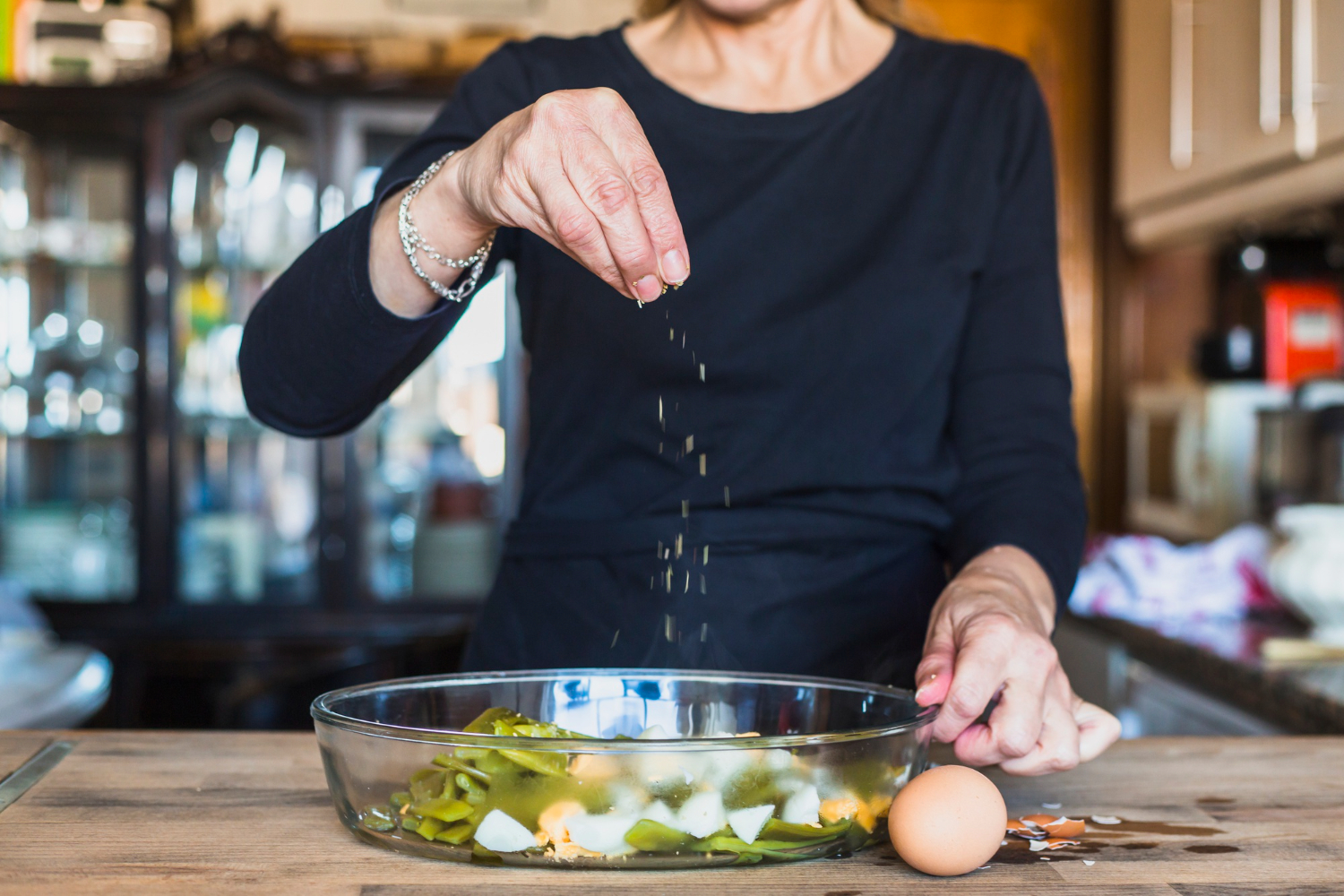
- Use your hands, not a shaker. Pinching salt between your fingers gives you control over distribution and a feel for quantity that a shaker simply cannot replicate.
- Taste everything, constantly. The only way to know if something needs more salt is to taste it and to know what properly seasoned food actually tastes like.
- Learn to distinguish flat from bland. Flat food is missing salt or acid. Bland food may be a different problem missing aromatics, fat, or technique. Salt won’t fix bland.
- Respect the finishing salt. Knowing when to add a final crack of flaky sea salt and when not to is the mark of a cook who genuinely understands the ingredient.
Conclusion: rethink everything you know about salt
Understanding how salt works in cooking is one of the highest-leverage skills you can develop as a cook. This not about making food taste salty. It’s about suppressing bitterness and amplifying sweetness. It about restructuring proteins and managing moisture. It’s about controlling fermentation in bread, preserving food for months without refrigeration, and building layers of flavor that no other ingredient can replicate.
Salt is the oldest, cheapest, and most misunderstood ingredient in your kitchen. Use it with intention early, in layers, at the right time, in the right form and it will transform your cooking more than any gadget, technique, or premium ingredient ever could.
The next time your food tastes flat, don’t reach for hot sauce or more herbs. Taste carefully, and ask yourself: is this under-salted? The answer, more often than not, is yes.
Top 10 FAQs: how salt works in cooking
Q1. Does salt actually make food taste better, or does it just make it taste salty?
Salt does far more than add a salty taste. At the correct amount, salt suppresses bitter compounds, enhances sweetness and umami, and amplifies aromatic compounds. When food is properly salted, you don’t notice the salt itself you simply notice that everything tastes more vivid, complex, and like itself. Over-salting is what makes food taste “too salty.” Proper salting makes food taste complete.
Q2. What is the best time to add salt when cooking meat?
Either immediately before cooking (within 5 minutes) or well in advance ideally 1 to 48 hours before, depending on the size of the cut. Salting meat 12–24 hours in advance (dry brining) gives the salt time to penetrate the tissue, season it from within, and improve moisture retention. Avoid the middle window of 5–40 minutes, where surface moisture has been drawn out but not yet reabsorbed, which can lead to steaming rather than searing.
Q3. How much salt should you add to pasta water?
Pasta water should be generously salted commonly described as “salty as the sea,” though in practice, about 1 tablespoon of kosher salt per liter of water (or roughly 1–2% salinity) is a widely used benchmark. The pasta absorbs some salt as it cooks, seasoning it from the inside. If your pasta consistently needs salt after cooking, the water was under-salted.
Q4. Is kosher salt better than table salt for cooking?
Kosher salt is generally preferred by professional cooks for its large, coarse flakes that you can pinch and feel, making it easier to control seasoning by touch. It also dissolves more slowly, giving you more control. However, the two are not interchangeable by volume kosher salt is less dense, so you typically need more by volume to achieve the same seasoning effect as table salt.
Q5. Why does salt make bread taste better?
Salt performs multiple functions in bread: it strengthens the gluten network (making dough more elastic and structured), slows yeast fermentation (allowing complex flavors to develop and preventing over-proofing), suppresses any bitterness in the flour, and enhances the overall flavor of all other ingredients. Bread baked without salt is noticeably flat in flavor and texture.
Q6. Does salt actually draw moisture out of food, and is that good or bad?
Yes, salt draws moisture out of food through osmosis and whether that’s desirable depends on the context. For vegetables like eggplant or cucumber, drawing out moisture before cooking removes excess water, improves texture, and concentrates flavor. For meat, if given enough time, the moisture is reabsorbed along with the dissolved salt, actually improving juiciness. It’s bad only when meat is salted for a short time then cooked immediately, which leaves excess surface moisture that hinders browning.
Q7. Why does salt in sweet recipes like cookies and cakes matter?
Salt in sweet baked goods suppresses bitterness from cocoa powder or flour, prevents sweetness from becoming cloying, and enhances the perception of all other flavors. Without it, cookies, cakes, and pastries taste flat and one-dimensional. A recipe that says “1/4 teaspoon salt” is not being cautious that salt is doing meaningful work in the final product.
Q8. What is the difference between brining and dry brining?
Wet brining involves submerging food in a saltwater solution (and often sugar and aromatics) for several hours or days. It penetrates deeply and adds moisture and flavor. Dry brining involves rubbing or coating food with salt and allowing it to rest uncovered in the refrigerator. The salt draws out surface moisture, which then dissolves the salt and is reabsorbed seasoning the meat from within while also drying the surface for better browning. Many chefs now prefer dry brining for its cleaner results and simpler process.
Q9. How does salt preserve food?
Salt preserves food through osmosis at the microbial level. A high-salt environment draws water out of bacterial cells, causing them to dehydrate and die or become unable to reproduce. Most harmful bacteria cannot survive in salt concentrations above about 10%. This principle underlies cured meats, fermented vegetables, dried fish, and pickles foods that have been safely preserved without refrigeration for thousands of years.
Q10. Can you fix a dish that has too much salt?
Over-salting is harder to fix than under-salting. The most effective strategies include: adding more of the other ingredients (bulk dilutes salt concentration), adding starchy elements like bread, potato, or pasta that can absorb some salt, increasing acidity (lemon juice or vinegar can balance perceived saltiness), adding fat (which coats the palate and moderates sharpness), or adding a small amount of sugar to round out harsh edges. Prevention tasting frequently and salting incrementally is always better than repair.

GIPHY App Key not set. Please check settings