
 Admin
Admin
Introduction
Let us make this easy, practical, and genuinely helpful.
What Is a Diabetic Diet Plan and Why Does It Matter?
A diabetic diet plan is not a punishment. It is simply a smarter way of eating that keeps your blood sugar steady throughout the day. When you eat certain foods especially refined carbohydrates and added sugars your blood glucose spikes sharply. Over time, these spikes damage blood vessels, nerves, and organs.
Therefore, the goal of a blood sugar diet is not to eliminate all carbohydrates. Instead, it is to choose the right carbohydrates ones that digest slowly, cause gentle rises in blood sugar, and keep you feeling full and energized for longer. These are called low glycemic foods, and they are the foundation of every good diabetic diet plan.
Additionally, a well-structured A1C-lowering diet focuses on:
- Controlling portion sizes
- Spreading meals evenly throughout the day
- Including plenty of fibre, lean protein, and healthy fats
- Reducing ultra-processed foods, sugary drinks, and refined grains
When you follow these principles consistently, you give your body the best chance to regulate insulin effectively and bring your A1C numbers down naturally over time.
Understanding the Glycemic Index Your Most Useful Tool
Before we build your diabetes meal plan, it helps to understand the glycemic index (GI). The GI is a scale from 0 to 100 that measures how quickly a food raises your blood sugar after you eat it.
- Low GI (55 or below): Digests slowly great for glucose control meals
- Medium GI (56–69): Moderate blood sugar effect eat in smaller portions
- High GI (70 and above): Digests quickly causes sharp blood sugar spikes
As a result, your diabetic diet plan should be built primarily around low and medium GI foods. These include vegetables, legumes, whole grains, most fruits, dairy, and lean proteins. We will cover all of these in detail below.
The Diabetic Food List: What to Eat
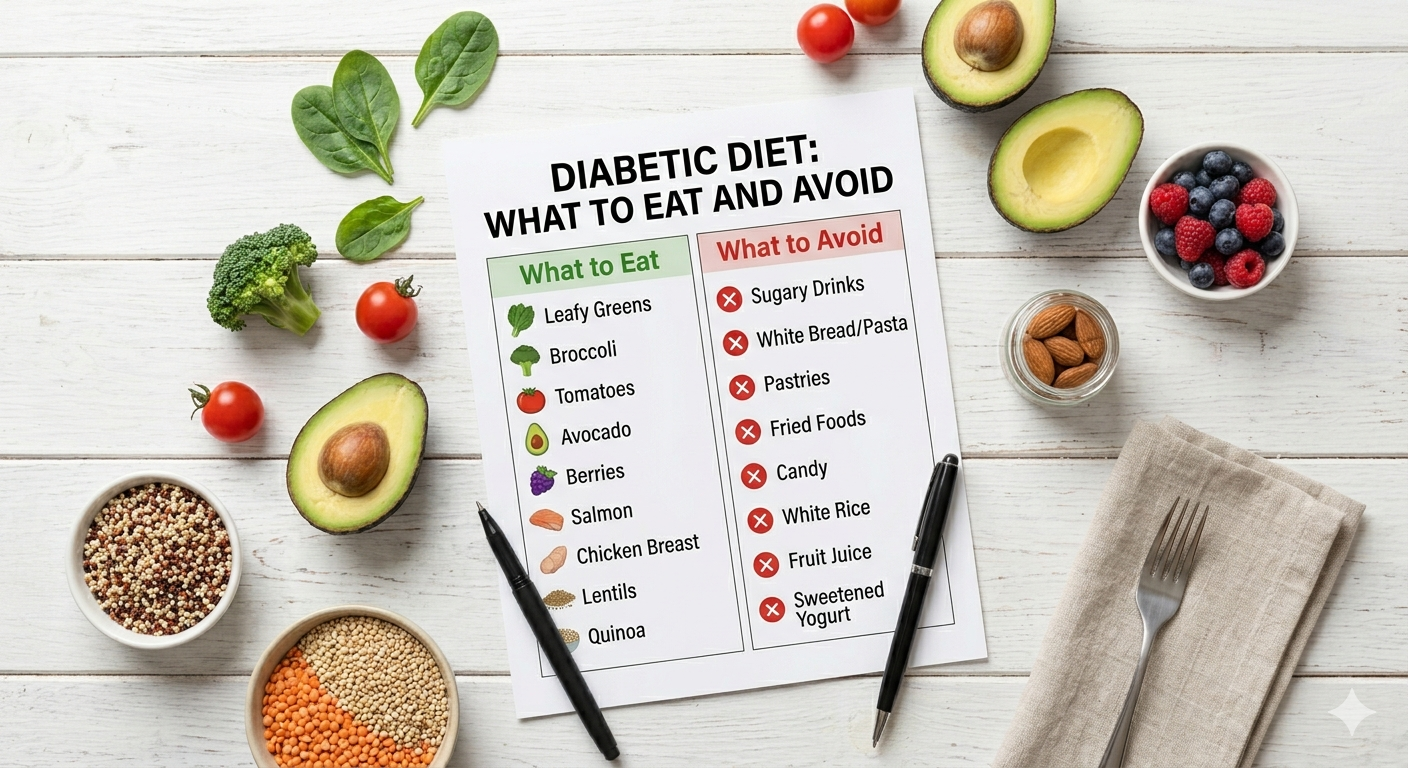
Here is your complete printable diabetic food list everything you should be loading your plate and your grocery cart with.
Vegetables (Eat Freely)
Vegetables are the cornerstone of any effective blood sugar diet. Most non-starchy vegetables have a very low glycemic index, extremely high fibre content, and powerful anti-inflammatory nutrients.
Best choices:
- Leafy greens spinach, kale, arugula, Swiss chard
- Broccoli, cauliflower, Brussels sprouts
- Zucchini, cucumber, celery
- Bell peppers (all colors)
- Asparagus, green beans
- Mushrooms, onions, garlic
- Tomatoes, cabbage, eggplant
Eat these at every single meal if you can. They fill your plate, satisfy your hunger, and barely touch your blood glucose levels at all.
Proteins (Eat at Every Meal)
Protein is one of the most important nutrients in any diabetic diet plan because it has almost no direct effect on blood sugar. Furthermore, protein slows the absorption of carbohydrates, which means smaller glucose spikes after meals.
Best choices:
- Chicken breast and turkey (skinless)
- Salmon, sardines, mackerel, tuna
- Eggs (whole eggs are fine the research is clear)
- Greek yogurt (plain, unsweetened)
- Cottage cheese
- Lentils, chickpeas, black beans, kidney beans
- Tofu and tempeh
These insulin-friendly recipes all start with a solid protein base. Aim for 25–35 grams of protein per main meal.
Healthy Fats (Include Daily)
For a long time, people with diabetes were told to avoid fat. That advice has since been updated significantly. Healthy fats do not raise blood sugar, they support heart health (critical for diabetics), and they keep you full between meals.
Best choices:
- Avocado and avocado oil
- Olive oil (extra virgin)
- Walnuts, almonds, pecans
- Chia seeds, flaxseeds
- Fatty fish (salmon, mackerel)
- Full-fat plain Greek yogurt in moderation
Whole Grains and Low GI Carbohydrates (Portion Carefully)
You do not need to eliminate carbohydrates from your diabetic diet plan. You simply need to choose wisely and portion carefully. The following carbohydrates are low on the glycemic index and rich in fibre.
Best choices:
- Rolled oats and steel-cut oats
- Quinoa
- Brown rice (smaller portions)
- Sweet potato
- Barley, farro
- Whole grain bread (100% whole wheat check the label)
- Lentils and legumes
A useful rule of thumb: keep carbohydrate portions to about ¼ of your plate per meal.
Fruits (Yes in Moderation)
Fruit often confuses people managing diabetes. The truth is that most whole fruits are low to medium GI and perfectly appropriate for a pre-diabetic diet and full diabetic diet plan alike. The key is portion size and choosing lower-sugar options.
Best choices:
- Berries blueberries, strawberries, raspberries (lowest sugar, highest fibre)
- Apples and pears (eat with the skin)
- Oranges and grapefruit
- Cherries and peaches
- Kiwi
Avoid fruit juices entirely. Even 100% fruit juice removes the fibre and delivers a rapid sugar load that spikes blood glucose quickly.
What to Avoid on a Diabetic Diet Plan
Equally important as knowing what to eat is knowing what to avoid. These foods consistently cause blood sugar spikes, promote insulin resistance, and make glucose control meals much harder to maintain.
Avoid or strictly limit:
- Sugary drinks soda, fruit juice, sweet tea, energy drinks, flavored coffee
- Refined carbohydrates white bread, white rice, regular pasta
- Processed snack foods crackers, chips, pretzels, biscuits
- Sweets and desserts cakes, cookies, ice cream, candy
- Breakfast cereals most are surprisingly high in sugar
- Fried foods promote inflammation and insulin resistance
- Alcohol interferes with blood sugar regulation and liver function
- Full-fat processed meats sausage, bacon, hot dogs in excess
You do not need to be perfect 100% of the time. However, consistently avoiding these foods makes every other part of your diabetic diet plan work better and faster.
Your 7-Day Diabetic Meal Plan for Beginners
Here is a full week of glucose control meals built around the foods above. Each day is designed to keep blood sugar stable, provide complete nutrition, and taste genuinely good.
Day 1
Breakfast (7:30 AM): Steel-cut oatmeal with cinnamon, walnuts, and fresh blueberries. Lunch (12:30 PM): Grilled chicken breast salad with spinach, cucumber, tomato, and olive oil dressing. Snack (3:30 PM): Small apple with 1 tablespoon natural almond butter. Dinner (7:00 PM): Baked salmon with roasted broccoli and half a cup of quinoa
Day 2
Breakfast: 2 scrambled eggs with sautéed spinach and half an avocado. Lunch: Lentil soup with a side of mixed greens salad. Snack: Plain Greek yogurt with a handful of raspberries. Dinner: Turkey and vegetable stir-fry with cauliflower rice
Day 3
Breakfast: Greek yogurt parfait with chia seeds, walnuts, and strawberries. Lunch: Tuna salad in lettuce wraps with cucumber and tomato. Snack: A small handful of mixed nuts (almonds, walnuts, pecans). Dinner: Baked chicken thigh with roasted Brussels sprouts and sweet potato (small portion)
Day 4
Breakfast: Veggie omelets eggs with bell peppers, mushrooms, and onion Lunch: Chickpea and spinach salad with lemon and olive oil Snack: Celery sticks with 2 tablespoons hummus Dinner: Grilled mackerel with steamed green beans and a side salad
Day 5
Breakfast: Overnight oats made with unsweetened almond milk, chia seeds, and blueberries. Lunch: Black bean and vegetable soup with a small corn tortilla. Snack: Hard-boiled egg with a few cherry tomatoes. Dinner: Baked turkey meatballs with zucchini noodles and tomato sauce (no added sugar)
Day 6
Breakfast: Smoothie unsweetened almond milk, spinach, half a banana, chia seeds, protein powder Lunch: Grilled salmon salad with arugula, cucumber, avocado, and lemon dressing Snack: Small orange with a handful of almonds Dinner: Chicken and vegetable curry with a small serving of brown rice
Day 7
Breakfast: 2 poached eggs on one slice of whole-grain toast with sliced avocado. Lunch: Grilled chicken wrap in a whole wheat tortilla with lettuce, tomato, and Greek yogurt dressing. Snack: Plain cottage cheese with a few sliced strawberries. Dinner: Baked cod with roasted asparagus and a small sweet potato
Portion Control: The Diabetes Plate Method
One of the simplest and most effective tools in any diabetes meal plan is the Plate Method. You do not need to count every calorie. Instead, visually divide your plate like this:
- ½ of your plate: Non-starchy vegetables (greens, broccoli, peppers, zucchini)
- ¼ of your plate: Lean protein (chicken, fish, eggs, legumes)
- ¼ of your plate: Quality carbohydrates (brown rice, quinoa, sweet potato, lentils)
This simple visual approach naturally limits carbohydrates, boosts fibre and protein intake, and helps manage portion sizes without obsessive tracking. Consequently, many people see meaningful improvements in their blood sugar readings within weeks of consistently following this method.
Meal Timing and Blood Sugar: Why It Matters
When you eat is almost as important as what you eat. Skipping meals especially breakfast can cause blood sugar to drop and then spike sharply when you do eat. Therefore, try to eat at regular, consistent intervals throughout the day.
Helpful habits:
- Eat every 4–5 hours to keep glucose levels stable
- Do not skip meals, even when you are not hungry
- Have a small, balanced snack between meals if blood sugar tends to dip
- Avoid eating large meals late at night insulin sensitivity drops in the evening
Additionally, a short 10–15-minute walk after meals has been shown in multiple studies to significantly reduce post-meal blood sugar spikes. It is one of the simplest and most effective tools available to anyone following a pre-diabetic diet or a full A1C-lowering diet.
Quick Tips for Long-Term Success
Managing diabetes through diet is a long game, not a sprint. Here are the habits that make the biggest difference over time:
- Read nutrition labels carefully. Look for hidden sugars they appear under many names including dextrose, maltose, corn syrup, fructose, and cane juice.
- Cook at home as often as possible. Restaurant meals are notoriously high in hidden sugars, refined oils, and sodium. Home cooking gives you complete control over your diabetic diet plan.
- Stay hydrated with water. Dehydration concentrates blood glucose. Aim for 8–10 glasses of plain water per day.
- Include fibre at every single meal. Fibre is one of the most powerful tools for glucose control because it physically slows the absorption of sugar into the bloodstream. Vegetables, legumes, nuts, seeds, and whole grains are your best sources.
- Track your blood sugar after meals. This gives you real-world feedback on which foods affect your glucose most. Furthermore, it helps you personalize your diabetic diet plan over time based on your own body’s unique responses.
10 Frequently Asked Questions About the Diabetic Diet Plan
Q1. What is the best diabetic diet plan for beginners?
The best diabetic diet plan for beginners is one that is simple, sustainable, and built around whole foods. Start with the Plate Method fill half your plate with non-starchy vegetables, a quarter with lean protein, and a quarter with low glycemic carbohydrates. This approach requires no calorie counting and naturally supports glucose control. Additionally, focus on cutting out sugary drinks first that single change can have a dramatic effect on your blood sugar readings within just a few days. Do not try to overhaul everything at once. Instead, make one or two small changes per week and build gradually. Over time, these small shifts compound into powerful, lasting results. Working with a registered dietitian who specializes in diabetes is also a highly worthwhile investment, especially in the first few months of making dietary changes.
Q2. What foods lower blood sugar quickly?
Several low glycemic foods can help bring blood sugar down more quickly when levels are elevated. Apple cider vinegar (1–2 tablespoons diluted in water before meals) has been shown in studies to meaningfully reduce post-meal blood glucose spikes. Additionally, foods high in soluble fibre such as oats, flaxseeds, chia seeds, and legumes slow sugar absorption and promote more gradual glucose curves. Cinnamon added to meals may also improve insulin sensitivity over time. Furthermore, lean proteins like eggs, chicken, and fish have virtually no glycemic impact and help buffer the blood sugar effect of carbohydrates eaten alongside them. However, it is important to understand that if your blood sugar is dangerously high, food choices alone are not the appropriate response contact your healthcare provider immediately for proper medical management.
Q3. Can a diabetic eat fruit?
Yes most whole fruits are absolutely appropriate as part of a well-managed diabetic diet plan. The key is choosing lower-sugar options and minding your portions. Berries particularly blueberries, raspberries, and strawberries are among the best fruit choices because they are low in sugar, extremely high in fibre, and packed with antioxidants that reduce inflammation. Apples, pears, oranges, and peaches are also solid choices when eaten whole with their skin and fibre intact. What diabetics should avoid is fruit juice even 100% natural juice removes the fibre and delivers a concentrated sugar load that spikes blood glucose rapidly. Additionally, dried fruits like raisins, dates, and cranberries are very concentrated in sugar and should be consumed only in very small amounts as part of a carefully managed diabetes meal plan.
Q4. Is rice bad for diabetics?
White rice has a high glycemic index and causes sharp blood sugar spikes, so it is generally not the best choice for a diabetic diet plan. However, you do not necessarily have to give up rice entirely. Brown rice, wild rice, and black rice are significantly lower on the glycemic index and higher in fibre than white rice. Furthermore, portion size matters enormously a small serving of brown rice (about ¼ cup cooked) as part of a balanced meal with protein and vegetables is very different from a large bowl of white rice on its own. Cooling cooked rice in the fridge and reheating it also increases its resistant starch content, which further lowers its glycemic impact. Alternatives like cauliflower rice, quinoa, and barley are excellent options that provide satisfying texture with a much gentler effect on blood glucose.
Q5. What is the best breakfast for a diabetic?
The best breakfast choices for a diabetic diet plan are high in protein and fibre, low in refined carbohydrates, and completely free of added sugar. Excellent options include: scrambled eggs with vegetables and avocado, plain Greek yogurt with berries and chia seeds, steel-cut or rolled oats with walnuts and cinnamon (not instant oats), a vegetable omelet with a slice of whole grain toast, or a protein smoothie made with unsweetened almond milk, spinach, and a small amount of low-sugar fruit. What you should consistently avoid at breakfast are sugary cereals, flavored yogurts, white toast with jam, pastries, pancakes, waffles, and fruit juices. These foods cause a rapid blood glucose spike first thing in the morning, which can set an unstable blood sugar pattern for the entire rest of your day, making glucose control much harder throughout.
Q6. How many carbs should a diabetic eat per day?
Carbohydrate needs vary from person to person, and the right amount depends on your body size, activity level, medication, and individual metabolic response. That said, most standard diabetic diet plan guidelines suggest aiming for 45–60 grams of carbohydrates per main meal and 15–30 grams per snack. For a full day, this typically means a total of 130–180 grams of carbohydrates. However, some people particularly those following a pre-diabetic diet or trying to achieve more aggressive A1C lowering benefit from a lower carbohydrate intake of 50–100 grams per day under medical supervision. The most important thing is choosing the right carbohydrates low glycemic foods rich in fibre rather than simply minimizing carbs to the extreme. Always work with your healthcare provider or dietitian to determine the right carbohydrate range for your specific situation and treatment plan.
Q7. What snacks are good for diabetics?
Snacks are an important part of a well-structured diabetes meal plan because they help keep blood sugar stable between meals. The best diabetic snacks combine protein, fibre, and healthy fat to slow digestion and prevent blood sugar fluctuations. Great snack options include: a small apple with natural almond butter, plain Greek yogurt with berries, a small handful of mixed nuts (almonds, walnuts), celery or cucumber with hummus, hard-boiled eggs, cottage cheese with a few cherry tomatoes, or a small portion of cheese with whole grain crackers. Additionally, you should always keep healthy snacks readily available in your bag, at your desk, and in your car so you never get caught hungry without a good option. Being caught hungry without a planned snack is one of the most common reasons people with diabetes make blood sugar-spiking food choices in the moment.
Q8. What drinks are safe for a diabetic?
Drinks are one of the most important and most overlooked parts of a diabetic diet plan. The safest and best drink for anyone with diabetes is plain water. It hydrates without affecting blood sugar at all. Additionally, sparkling water (unflavored), herbal teas, black coffee, and green tea are all excellent choices. Green tea in particular contains compounds that may improve insulin sensitivity over time. What you should consistently avoid are regular sodas, fruit juices, sweetened teas, energy drinks, sports drinks, and flavored coffee beverages all of which are extremely high in sugar and cause dramatic blood glucose spikes. Diet sodas and artificially sweetened drinks are debated some research suggests they may still affect insulin response indirectly. Water with fresh lemon, cucumber, or mint is a delicious and completely safe alternative that makes staying hydrated feel more enjoyable throughout the day.
Q9. Can exercise help control blood sugar?
Absolutely exercise is one of the most powerful tools available for managing blood sugar, and it works synergistically with your diabetic diet plan to produce dramatically better results than diet alone. When you exercise, your muscles use glucose for fuel which directly lowers blood sugar levels. Furthermore, regular physical activity improves insulin sensitivity, meaning your cells become better at responding to insulin and absorbing glucose from the bloodstream. Both aerobic exercise (walking, swimming, cycling) and strength training (weight lifting, resistance bands) are beneficial for blood sugar management. Even a 10–15-minute walk after each meal has been shown in clinical studies to significantly reduce post-meal glucose spikes. The American Diabetes Association recommends at least 150 minutes of moderate-intensity exercise per week. Start with daily walks if you are new to exercise it is simple, free, and remarkably effective for A1C lowering.
Q10. How quickly can a diabetic diet plan lower A1C?
A well-structured diabetic diet plan combined with consistent lifestyle changes can begin to lower A1C within 8 to 12 weeks. Most people who make meaningful dietary changes cutting out sugary drinks, switching to low glycemic foods, controlling portions, and eating protein at every meal see measurable improvement in their A1C after two to three months. More significant reductions, particularly for people starting with high A1C levels, may take six to twelve months of consistent effort. Additionally, combining dietary changes with regular exercise, adequate sleep (7–8 hours per night), and stress management accelerates A1C improvement noticeably. It is important to monitor your progress through regular blood tests and work closely with your healthcare provider throughout the process. Do not rely on diet alone if your blood sugar levels are dangerously elevated medication and medical guidance remain essential parts of managing type 2 diabetes safely and effectively.
Final Thoughts
Managing type 2 diabetes through a thoughtful, consistent diabetic diet plan is one of the most empowering things you can do for your health. You are not giving up good food you are simply choosing better food. And the difference that choice makes to your energy, your blood sugar, your A1C numbers, and your long-term health is genuinely remarkable.
Start with the printable diabetic food list in this guide. Build your grocery shopping around it. Follow the 7-day diabetes meal plan for one week and see how you feel. Then adjust, personalize, and build from there.
You have everything you need. Take it one meal at a time and trust the process.

GIPHY App Key not set. Please check settings