
 Admin
Admin
The Ultimate Vegan Grocery List: Essentials for Every Pantry
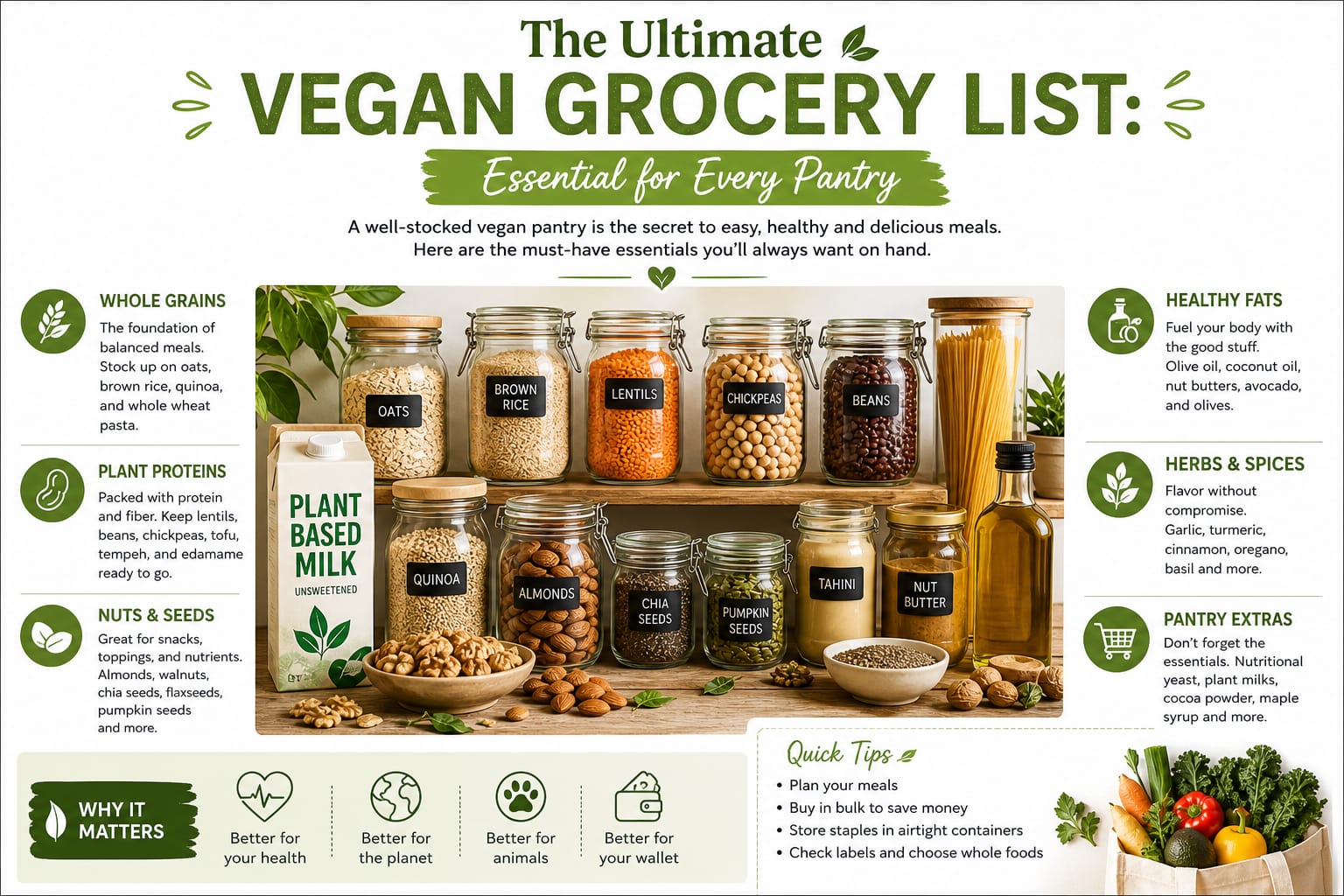
So, you want to eat more plants? That is a great idea! Whether you are just starting out or you have been vegan for a while, having the right foods at home makes everything easier. In fact, a good vegan grocery list is the first step to eating well without stress. This guide will show you exactly what to buy, why each food matters, and how to build a healthy pantry step by step. Let us dive in!
What Is a Vegan Grocery List?
First of all, let us make things clear. A vegan grocery list is simply a list of foods that come from plants. This means no meat, no fish, no eggs, and no dairy. Instead, you buy fruits, vegetables, grains, beans, nuts, and seeds. Moreover, you can also find many tasty vegan versions of your favorite foods like milk, yogurt, and even cheese made from plants. Therefore, eating vegan is not as hard as it sounds when you know what to look for.
Why Building a Vegan Grocery List Matters
Additionally, having a solid vegan grocery list saves you time and money. When you walk into a store without a plan, you might grab the wrong things or forget important items. However, with a clear list, you shop smarter and faster. Furthermore, it helps you make sure you get all the nutrients your body needs. Since plant foods are so different from meat and dairy, you want to make sure you cover all your bases. Consequently, a well-planned list keeps you healthy and happy.
The Ultimate Vegan Grocery List at a Glance
Here is a handy table to show you the main food groups to include in your vegan grocery list, along with key items and why they are important. Use this as your quick reference when you head to the store.
|
Category |
Key Items | Why It Matters |
| Grains & Cereals | Brown rice, oats, quinoa, whole wheat bread |
Give you energy and fiber to stay full |
|
Legumes |
Lentils, chickpeas, black beans, kidney beans | Great source of protein and iron |
| Nuts & Seeds | Almonds, chia seeds, flaxseeds, sunflower seeds |
Healthy fats, protein, and omega-3s |
|
Vegetables |
Spinach, broccoli, kale, sweet potato, carrots | Vitamins, minerals, and antioxidants |
| Fruits | Bananas, berries, apples, oranges, mangoes |
Natural sugars, vitamin C, and fiber |
|
Plant Proteins |
Tofu, tempeh, edamame, seitan | Complete protein sources for muscles |
| Dairy Alternatives | Almond milk, oat milk, coconut yogurt, vegan cheese |
Calcium and vitamin D replacements |
|
Condiments & Extras |
Nutritional yeast, soy sauce, tahini, maple syrup |
Add flavor and key nutrients like B12 |
1. Grains and Cereals: Your Energy Base
To begin with, grains are the foundation of a great vegan grocery list. They give your body the carbohydrates it needs to stay active and focused all day. Similarly, whole grains like brown rice, quinoa, and oats also give you fiber, which keeps your tummy happy. Additionally, whole wheat bread, pasta, and tortillas are easy to cook with and very filling.
For example, you can make a quick oatmeal bowl for breakfast, a rice and bean lunch, and quinoa salad for dinner. Therefore, grains are a must on every vegan grocery list. When you shop, try to choose whole grain options over white or refined ones because they have more nutrients.
2. Legumes: The Plant Protein Stars
Next, let us talk about legumes. These include beans, lentils, chickpeas, and peas. Without a doubt, legumes are the protein powerhouses of a vegan grocery list. They are cheap, filling, and super easy to cook. Furthermore, they are packed with iron, fiber, and B vitamins, which are things your body really needs.
For instance, you can make a warm lentil soup, a chickpea stir-fry, or black bean tacos. As a result, legumes make your meals hearty and satisfying. Also, canned beans work just as well as dried ones, so you can save time on busy days. Consequently, legumes should always be on your vegan grocery list.
3. Nuts and Seeds: Tiny Foods with Big Benefits
Moreover, do not forget to add nuts and seeds to your vegan grocery list. They are small but very powerful. Specifically, almonds, walnuts, and cashews give you healthy fats and protein. Similarly, chia seeds, flaxseeds, and hemp seeds are loaded with omega-3 fatty acids, which are great for your brain and heart.
In addition, seeds like sunflower seeds and pumpkin seeds make great snacks. You can also add them to salads, smoothies, and oatmeal. Therefore, keeping a variety of nuts and seeds in your pantry is a smart move. Besides, nut butters like peanut butter and almond butter are tasty and easy ways to get healthy fats every day.
4. Fresh Vegetables: The Heart of Every Meal
Of course, no vegan grocery list is complete without plenty of fresh vegetables. Vegetables are loaded with vitamins, minerals, and antioxidants that keep your body strong. Additionally, they are low in calories but high in fiber, which means they fill you up without weighing you down.
Some great vegetables to always have on hand include spinach, kale, broccoli, carrots, bell peppers, and sweet potatoes. Furthermore, leafy greens like spinach and kale are especially important because they contain calcium and iron. Therefore, try to eat a rainbow of vegetables every day. In other words, the more colors on your plate, the better your nutrition.
5. Fresh Fruits: Nature’s Sweet Treats
Likewise, fruits are a key part of your vegan grocery list. They are naturally sweet, delicious, and full of vitamins. For example, bananas are a great source of potassium, while berries like blueberries and strawberries are packed with antioxidants. Similarly, citrus fruits like oranges and lemons give you a big boost of vitamin C.
In addition, fruits make perfect snacks and desserts. You can blend them into smoothies, add them to oatmeal, or simply eat them as they are. Also, frozen fruits are just as nutritious as fresh ones and usually cost less. Consequently, stocking up on both fresh and frozen fruits is a great habit for any vegan.
6. Plant-Based Proteins: Beyond Beans
Furthermore, there are many other plant proteins that deserve a spot on your vegan grocery list. Tofu, tempeh, and edamame are all made from soybeans and are excellent sources of protein. Seitan, which is made from wheat gluten, is another popular protein that looks and feels like meat.
Additionally, these foods are very versatile. For instance, tofu can be scrambled, baked, or added to soups. Tempeh works well in tacos and stir-fries. Therefore, having these plant proteins in your fridge or freezer means you can always make a filling, protein-rich meal. As a result, you will never feel like you are missing out.
7. Dairy Alternatives: Creamy Without the Cow
Also, switching from dairy to plant-based alternatives is easier than ever. Your vegan grocery list should include plant milks like almond milk, oat milk, soy milk, or coconut milk. These work just like regular milk in recipes, cereal, and coffee. Moreover, oat milk is especially popular because it is creamy and tastes great.
In addition, you can find vegan yogurt, vegan butter, and even vegan cheese at most grocery stores. These products are made from coconut, cashews, or soy. Therefore, you do not have to give up creamy, comforting foods when you go vegan. Instead, you just discover exciting new versions of them.
8. Condiments and Pantry Extras: The Flavor Makers
Last but not least, your vegan grocery list needs some flavor boosters. These include items like soy sauce or tamari, nutritional yeast, tahini, hot sauce, and maple syrup. Specifically, nutritional yeast is a must-have because it has a cheesy, nutty flavor and is often fortified with vitamin B12, which is hard to get on a vegan diet.
Additionally, olive oil, coconut oil, and apple cider vinegar are great to keep in your pantry. They help you cook and dress salads easily. Furthermore, herbs and spices like garlic powder, cumin, turmeric, and paprika make your food taste amazing. Consequently, when your pantry is stocked with these extras, cooking becomes fun and easy.
Tips for Shopping Your Vegan Grocery List
Now that you know what to buy, here are some simple tips to help you shop your vegan grocery list like a pro.
- Shop the edges of the store first, since fresh fruits and vegetables are usually found there.
- Buy in bulk when possible. Grains, nuts, and dried beans cost less when you buy more.
- Check labels carefully. Some products look vegan but contain hidden dairy or eggs.
- Choose frozen vegetables and fruits to save money and reduce waste.
- Plan your meals before you shop so you only buy what you need.
- Try one new food each week to keep things exciting and expand your cooking skills.
Vegan Grocery List for Beginners
If you are just starting out, do not try to change everything at once. Instead, start with a basic vegan grocery list and build from there. Here is a simple starter list to get you going.
Start with oats, brown rice, pasta, canned beans, lentils, almond milk, bananas, apples, spinach, broccoli, carrots, tofu, peanut butter, olive oil, soy sauce, and nutritional yeast. Moreover, add garlic, onions, and your favorite spices. With these items, you can already make dozens of different meals. Therefore, this small vegan grocery list is a powerful starting point.
Final Thoughts on Your Vegan Grocery List
In conclusion, building a great vegan grocery list is not complicated. You simply need to cover the main food groups: grains, legumes, nuts and seeds, vegetables, fruits, plant proteins, dairy alternatives, and pantry extras. Additionally, having these foods stocked up at home means you are always ready to cook something healthy and delicious.
Furthermore, as you get more comfortable, you can try new foods and recipes. Ultimately, the goal of a vegan grocery list is to help you eat well, feel good, and enjoy your food. So grab your list, head to the store, and start building your perfect plant-based pantry today!
Frequently Asked Questions (FAQs)
1. What should be on a basic vegan grocery list?
A basic vegan grocery list should include whole grains like oats, rice, and pasta. Additionally, you need legumes such as lentils and chickpeas, along with fresh vegetables and fruits. Moreover, plant milks like almond or oat milk are important. Furthermore, nuts, seeds, and peanut butter give you healthy fats. Also, items like tofu and tempeh provide protein. Finally, pantry staples like soy sauce, olive oil, and nutritional yeast add flavor and nutrition. Therefore, even a simple list with these items gives you everything you need to cook balanced, satisfying vegan meals every day. Start small and build from there as you get more comfortable with plant-based cooking and shopping.
2. How do vegans get enough protein?
Getting enough protein on a vegan grocery list is easier than many people think. First of all, legumes like lentils, chickpeas, and black beans are high in protein. Furthermore, soy-based foods like tofu, tempeh, and edamame are complete proteins, which means they have all the amino acids your body needs. In addition, nuts, seeds, and nut butters also add protein to your diet. Grains like quinoa and oats contain protein too. Therefore, as long as you eat a variety of plant foods throughout the day, you will meet your protein needs without any trouble. Many athletes and active people thrive on a well-planned vegan diet with plenty of these protein-rich foods.
3. Is a vegan grocery list expensive?
Actually, a vegan grocery list can be very affordable. In fact, some of the cheapest foods in the store are vegan, including dried beans, lentils, oats, rice, and frozen vegetables. These staple items cost very little but are packed with nutrition. Furthermore, buying in bulk makes them even cheaper. Of course, specialty vegan products like vegan cheese or meat substitutes can be pricey. However, you do not need those to eat well. Therefore, if you focus on whole plant foods instead of processed vegan products, your grocery bill will likely go down. Many people find that switching to a plant-based diet actually saves them money over time compared to buying meat and dairy regularly.
4. What vitamins do vegans need to watch?
When you follow a vegan grocery list, there are a few key nutrients to pay attention to. First, vitamin B12 is the most important one because it is found almost exclusively in animal products. Therefore, you should look for foods fortified with B12, like nutritional yeast and some plant milks. Additionally, vitamin D, calcium, and iodine can be low in vegan diets. Furthermore, iron and zinc from plant foods are less easily absorbed than from meat. Consequently, eating vitamin C-rich foods alongside iron-rich ones helps your body absorb more. Moreover, omega-3 fatty acids from chia seeds and flaxseeds support brain health. Consider talking to a doctor or dietitian to see if supplements are right for you.
5. Can kids follow a vegan grocery list?
Yes, kids can absolutely thrive on a well-planned vegan grocery list. In fact, many children around the world eat plant-based diets and grow up healthy and strong. However, it is important to make sure kids get enough calories, protein, calcium, vitamin D, and B12. Therefore, plant milks fortified with calcium and vitamin D are very helpful. Furthermore, beans, tofu, and nut butters provide protein for growing bodies. Additionally, a colorful variety of fruits and vegetables gives kids the vitamins they need. It is always a good idea to speak with a pediatrician or registered dietitian when raising a vegan child. With careful planning, a vegan diet can support healthy growth and development at every age.
6. How do I meal plan with a vegan grocery list?
Meal planning with a vegan grocery list is simple and very helpful. First, decide what meals you want to eat for the week. For example, plan breakfasts like oatmeal or smoothies, lunches like grain bowls or soups, and dinners like stir-fries or pasta. Next, write down all the ingredients you need for those meals. Then check your pantry to see what you already have. Furthermore, batch cooking saves a lot of time. For instance, cook a big pot of rice or lentils on Sunday and use them throughout the week. Additionally, having frozen vegetables on hand means you can always throw together a quick meal. Therefore, with a little planning, eating vegan becomes easy and stress-free every single day.
7. What vegan foods are good for weight loss?
Many foods on a vegan grocery list are naturally great for weight management. First of all, vegetables are low in calories but high in fiber, which keeps you full. Similarly, fruits make great low-calorie snacks. Furthermore, whole grains like oats and brown rice digest slowly and help control hunger. Legumes like lentils and beans are also very filling due to their high fiber and protein content. In addition, avoiding processed foods and sugary snacks helps with weight loss too. Therefore, focusing on whole plant foods from your vegan grocery list is a smart and sustainable approach. However, remember that healthy weight loss is about overall balance and not just cutting calories. Always listen to your body and eat enough to feel satisfied and energized.
8. What are the best plant milks to add to my vegan grocery list?
There are many great plant milks to choose from for your vegan grocery list. Oat milk is one of the most popular because it is creamy and works well in coffee and cereal. Additionally, almond milk is light and low in calories, making it a good option for smoothies. Soy milk is especially high in protein and is often fortified with calcium and vitamin D. Furthermore, coconut milk is rich and great for cooking curries and soups. Cashew milk is also creamy and mild in flavor. Therefore, the best plant milk depends on what you are using it for. Try a few different types to find your favorites. Moreover, always check the label to choose unsweetened and fortified varieties for the best nutrition.
9. Are processed vegan foods healthy?
Not all processed vegan foods are healthy, and it is important to know the difference. While products like vegan burgers, vegan cheese, and packaged snacks can be convenient, they are often high in sodium, sugar, and unhealthy fats. Therefore, they should be enjoyed occasionally rather than daily. On the other hand, minimally processed foods like canned beans, tofu, frozen vegetables, and whole grain bread are great additions to your vegan grocery list. Furthermore, these foods keep most of their natural nutrients. Consequently, the foundation of a healthy vegan diet should always be whole plant foods. However, there is nothing wrong with enjoying a vegan burger or some vegan ice cream sometimes. Balance is always the key to a healthy and enjoyable plant-based lifestyle.
10. How do I stay full on a vegan grocery list?
Staying full on a vegan grocery list is all about eating the right combination of foods. First, make sure every meal includes a good source of protein, like beans, tofu, or lentils. Additionally, include healthy fats from nuts, seeds, or avocado, since fats slow digestion and keep you satisfied longer. Furthermore, fiber-rich foods like whole grains, vegetables, and legumes fill your stomach and keep hunger away. Moreover, do not skip meals or eat too little. Sometimes people feel hungry because they are not eating enough overall. Therefore, make your portions generous, especially when you first switch to a plant-based diet. Drinking enough water throughout the day also helps manage hunger. Consequently, with the right foods and habits, you will feel full, energized, and satisfied every day.

GIPHY App Key not set. Please check settings